
Cortinarius armillatus
- noun
- Specialized
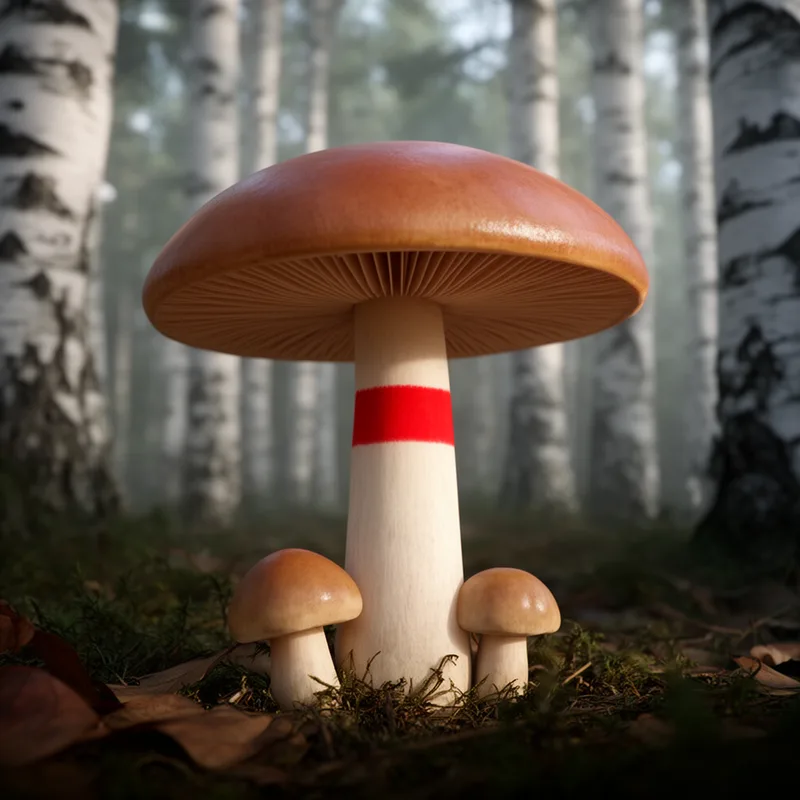
- Many foragers recognize Cortinarius armillatus by its red band and large tawny cap.
Examples
-
The mycologist discovered a cluster of Cortinarius armillatus near the edge of the birch grove.
-
Photographs of Cortinarius armillatus often highlight the pale cinnamon color of its gills.
-
Look at the Cortinarius armillatus!
-
I found a Cortinarius armillatus under the birch tree.
-
Foragers often seek out Cortinarius armillatus because of its distinctive red band on the stalk.
-
In autumn, Cortinarius armillatus can be found thriving around birch trees, attracting many mushroom enthusiasts.
-
A field guide describes Cortinarius armillatus as having large tawny caps and pale cinnamon gills.
Surface Forms
Morphology
Cortinarius + armillatus
This is a Latin binomial (genus + species) functioning as a proper name; the genus 'Cortinarius' is a technical taxonomic term and the species epithet 'armillatus' is not a common English word, so a B1 learner who 'knows the constituents' would not be able to derive the descriptive mushroom meaning (cap colour, gills, veil band, habitat). The sense is specialized and lexicalized in taxonomy rather than compositional English, making it unpredictable without domain or Latin knowledge.
Etymology
Cortinarius armillatus may come from old words that describe how the mushroom looks: Cortinarius comes from a word for a thin 'curtain' because young caps have a web-like veil, and armillatus means a 'ring' or 'bracelet' for the red band around the stalk. That's why the name fits a mushroom with a veil and a ringed stem.

