
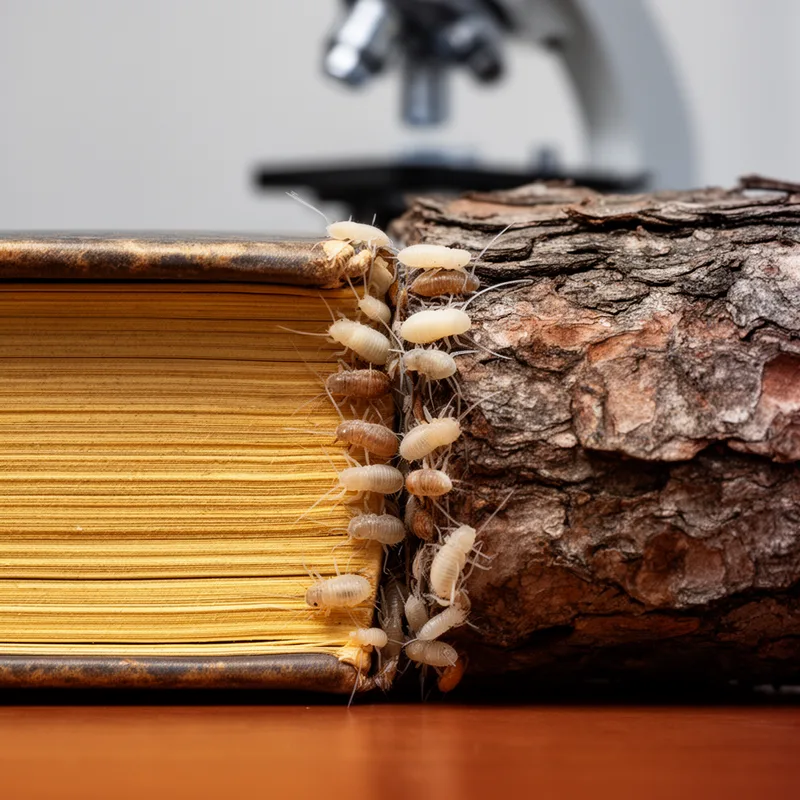
Corrodentia
- noun
- /kəˈrɒdɛnʃə/
- Archaic
- Although Corrodentia is now considered obsolete, it once grouped together booklice and bark-lice.
Examples
-
The Corrodentia order includes various species of booklice.
-
Recent taxonomic revisions have redistributed members previously assigned to Corrodentia into other insect orders.
-
The entomologist specialized in the study of Corrodentia and their evolutionary history.
-
Many researchers study Corrodentia for their ecological roles.
-
The order Corrodentia consists mainly of booklice and bark-lice, which are of interest to entomologists.
-
In the past, insects classified under Corrodentia were an important part of taxonomic studies.
-
As part of her research, the scientist examined the Corrodentia to better understand their relationships with other insect orders.
Synonyms


 1
9.9
A group of small insects like booklice that have soft bodies and use their mouths to chew
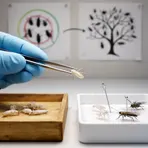
A former group of small insects like booklice and barklice now placed in Psocoptera
Compounds
- Archaic
A former group of small insects like booklice and barklice now placed in Psocoptera
Surface Forms
Etymology
Corrodentia comes from the Latin root corrodere, which means 'to gnaw', the same idea behind the English word corrode. It was used for a group of small insects, like booklice and bark-lice, that 'gnaw' at books or bark, so the name matches what they do.