

Cornus sanguinea
- noun
- Specialized
- The Cornus sanguinea brightens gardens in autumn with its vivid red stems.
Examples
-
In spring, the Cornus sanguinea produces small white flowers before its leaves fully emerge.
-
Gardeners often plant Cornus sanguinea for its striking red stems and ability to attract wildlife.
-
Gardeners often plant Cornus sanguinea for winter color and wildlife attraction.
-
The Cornus sanguinea is often used in garden landscaping.
-
I saw a beautiful Cornus sanguinea in the park.
-
In spring, the Cornus sanguinea showcases clusters of small white flowers before its leaves fully emerge.
-
The Cornus sanguinea provides vibrant color to gardens in autumn with its bright red stems.
Synonyms
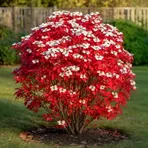
A European shrub that loses its leaves and has dull white flowers and red leaves in autumn
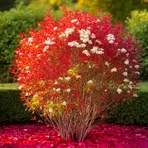
A European bush that loses its leaves, turns red in autumn, and has dull white flowers

A European bush that turns red in autumn and has white flowers
Surface Forms
Morphology
Cornus + sanguinea
The binomial is partly compositional: Cornus names the genus (dogwood) and sanguinea derives from Latin for 'blood-red', so a learner who knows both parts could infer a red-stemmed dogwood. However, 'sanguinea' is a Latin epithet and not in common learner dictionaries, and scientific names act as proper nouns, so an average B1 learner would not reliably derive the shrub meaning without prior exposure.
Etymology
Cornus sanguinea gets its name from Latin because sanguinea means 'blood-red', and its stems turn bright red in autumn and winter. So the name helps you remember this dogwood as the shrub with red stems and small white flowers.

