
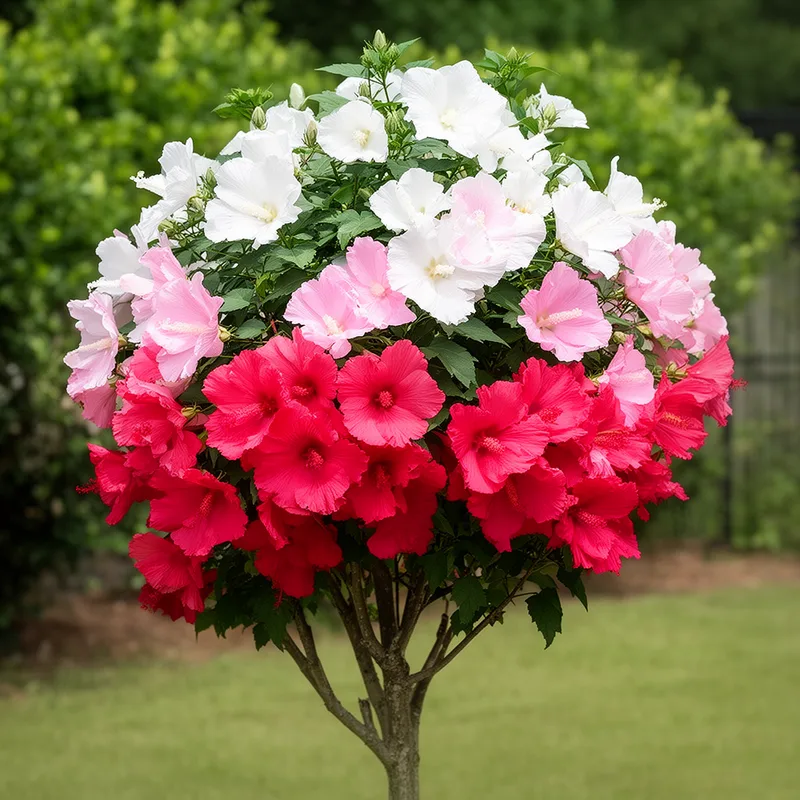
Confederate rose
- noun
- /kənˈfɛdərət roʊz/
- US
- Gardeners love the Confederate rose for its dramatic color-changing blossoms.
Examples
-
The Confederate rose blooms in late summer, adding vibrant colors to Southern gardens.
-
A mature Confederate rose can reach up to fifteen feet in height.
-
The Confederate rose blooms beautifully in my garden.
-
Many Confederate roses thrive in the warm climate of Florida.
-
Gardeners love the Confederate rose for its dramatic color-changing blossoms.
-
A mature Confederate rose can reach up to fifteen feet in height.
-
The Confederate rose blooms in late summer, adding vibrant colors to Southern gardens.
Synonyms

A Chinese bush or small tree with pale flowers that turn deep red at night

A Chinese bush with large flowers that change from white or pink to deep red in a day

A small tree with large flowers that change from white or pink to deep red in one day
Surface Forms
Morphology
A B1 learner who knows 'Confederate' (associated with the Confederate States/the American South) and 'rose' (a type of flowering shrub) would likely infer this is a kind of rose linked to the Confederacy or the southern U.S., so the basic composition is understandable. However, the actual referent is a hibiscus species rather than a true rose and the historical/regional naming is language- and culture-specific, so the exact meaning and botanical identity are not fully predictable from the parts.
Etymology
Confederate rose may get its name from how often it is grown in the southern United States. Gardeners in those 'Southern gardens' began calling the shrub the 'Confederate rose', so the name links the plant to that region.

