
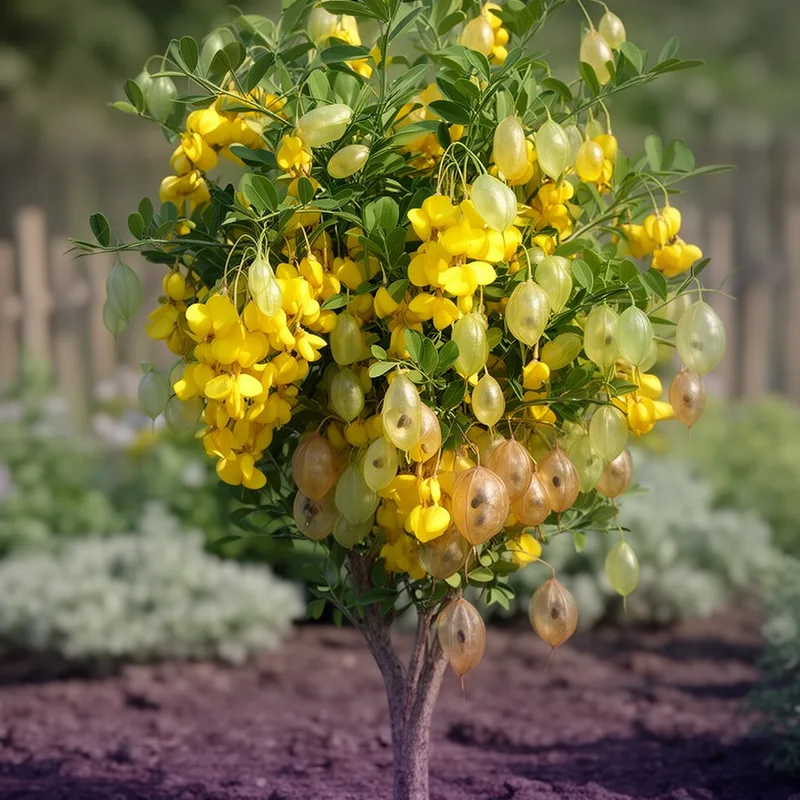
Colutea arborescens
- noun
- Specialized
- Gardeners appreciate Colutea arborescens for its unique, bladder-like seed pods that add interest to borders.
Examples
-
Local wildlife benefits when Colutea arborescens is planted, as its flowers and pods provide food throughout the season.
-
The Colutea arborescens in our garden attracts many butterflies with its bright yellow blooms.
-
The Colutea arborescens blooms beautifully in spring.
-
Many gardeners love Colutea arborescens for its vibrant yellow flowers.
-
Many gardeners appreciate Colutea arborescens for its unique, bladder-like seed pods that create visual interest in their gardens.
-
The Colutea arborescens provides essential food for local wildlife with its nutritious flowers and pods.
-
In spring, the vibrant yellow flowers of Colutea arborescens attract numerous pollinators to the garden.
Synonyms
A shrub with bright yellow flowers and large inflated pods that birds eat
Surface Forms
Morphology
Colutea + arborescens
This is a scientific binomial combining the genus name 'Colutea' (a shrub genus with bladder-like pods) with the Latin adjective 'arborescens' (literally 'tree-like' or 'becoming tree-like'), so the overall meaning — a tree-like/shrubby Colutea — is directly compositional. Although botanical Latin is specialized vocabulary, a B1 learner who knows both constituents can transparently infer it refers to a Colutea species with a tree-like habit.
Etymology
Colutea arborescens comes from Latin words that describe the plant: Colutea points to its puffy, bladder-like seed pods and arborescens means 'tree-like' because it grows as a small shrub. So the name helps you picture a yellow-flowering shrub with puffy pods, which is why gardeners call it Colutea arborescens.

