
Columbus Day
 5
3.2
5
3.2

- proper noun
- /kəˈlʌmbəs deɪ/
- US
- A group of students will perform on Oct. 12 as part of the city's Columbus Day festivities," Mazzarelli said.
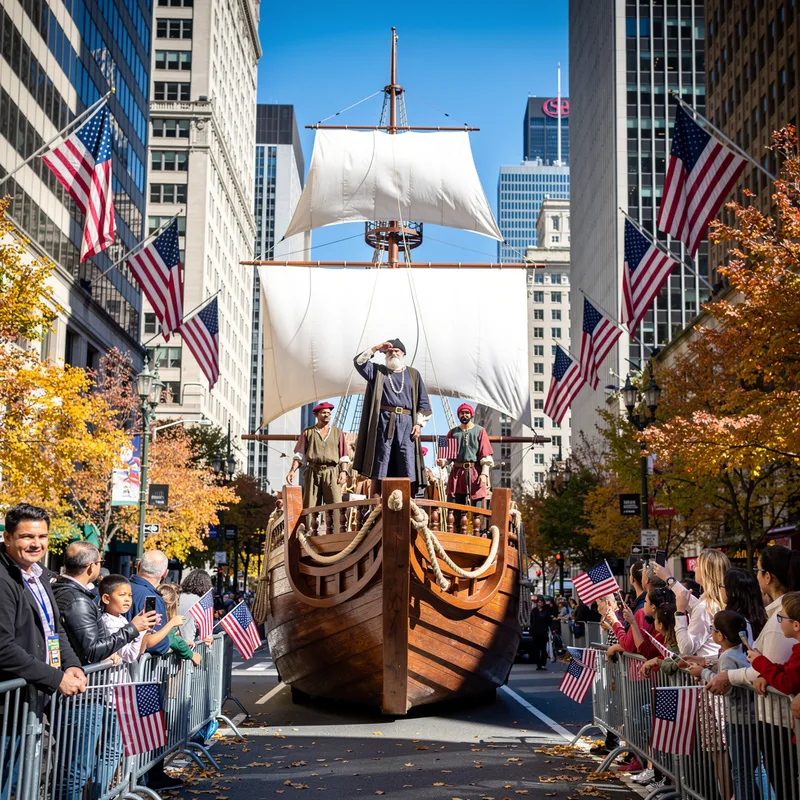
- Columbus Day parade
- Columbus Day 1909
Loading YouTube…
Watch on YouTubeNow, of course, some people still call it Columbus Day and to those people, I say, how you getting back to Jersey PATH train.
- Now, of course, some people still call it Columbus Day and to those people, I say, how you getting back to Jersey PATH train.
Examples
-
We're planning a family gathering to celebrate Columbus Day this year.
-
Most people in the U.S. think of today as Columbus Day.
Blog text (18) -
The Grand Canyon trip will be during Columbus Day weekend so soldiers can request a pass.
Blog text (16) -
I need to ask him if he's going to get Columbus Day off next month.
Blog text (19) -
Nutmeg will also carry on a Columbus Day tradition with a performance at Torrington City Hall.
Blog text (18) -
By Columbus Day in 1909, Little Italy's growing importance in the life of the city was obvious to nearly everyone in Baltimore.
Academic text (2000) -
For years, the Knights of Columbus had been marching on Columbus Day in major cities as a visible symbol of Catholic patriotism and contribution to American traditions.
Academic text (1991) -
When the Democratic governor of Maryland and the Democratic mayor of Baltimore joined Italian immigrants in their Columbus Day celebration in 1909, these white political leaders signaled their willingness to welcome Italian immigrants as members in good standing in the majority community.
Academic text (2000) -
Many businesses close on Columbus Day, giving workers a long weekend.
-
Schools often organize special activities for Columbus Day to teach students about history.
Synonyms


 1
4.2
1
4.2
A public holiday that remembers Christopher Columbus finding the Americas
Surface Forms
Morphology
The phrase is directly compositional: 'Columbus' identifies the historical figure and 'day' signals a calendar day related to that person, so learners will infer it is a day commemorating Columbus. Cultural specifics (the exact date or how it is observed) are not derivable from the words, but the core meaning is predictable from the constituents and parallels naming patterns for holidays in other languages.
Etymology
Columbus Day is named for the explorer Christopher Columbus and comes from the story of his long sea trip when he reached land in 1492. People chose a day to remember that 'arrival', so it became a public 'holiday' in the United States.