

Colaptes auratus
- noun
- Specialized
- The distinctive yellow feathers help birders identify Colaptes auratus in the field.
Examples
-
The Colaptes auratus is often spotted foraging for ants on lawns.
-
Researchers are studying the migration patterns of Colaptes auratus across the continent.
-
I saw a Colaptes auratus in the park yesterday.
-
The Colaptes auratus is known for its distinctive call.
-
Bird watchers often enjoy observing the colorful Colaptes auratus while it feeds on insects in backyards.
-
In spring, the Colaptes auratus returns to northern regions to build its nests in trees.
-
The Colaptes auratus is easily recognized by its black spots and unique yellow underwings.
Synonyms
 1
7.4
1
7.4

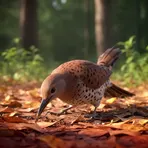
A large woodpecker with brown spotted feathers that often feeds on the ground

A large North American woodpecker with a red neck and yellow underwings and tail
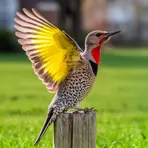
A large woodpecker with yellow feathers under its wings and tail and a red patch on its neck
Surface Forms
Morphology
Colaptes + auratus
The name is compositional: 'Colaptes' denotes a genus of flicker woodpeckers and 'auratus' (Latin for 'golden' or 'gilded') describes a property of the species, so together they denote the golden/northern flicker. For a learner who knows both constituents (including the Latin epithet), the species meaning is directly derivable from the parts, even though recognizing Latin morphology may require extra knowledge.
Etymology
Colaptes auratus is a Latin name that may come from old words meaning Colaptes 'pecker' and auratus 'golden', painting a simple picture of a bird that pecks wood and shows yellow or golden feathers. That's why the name fits the northern flicker today.