
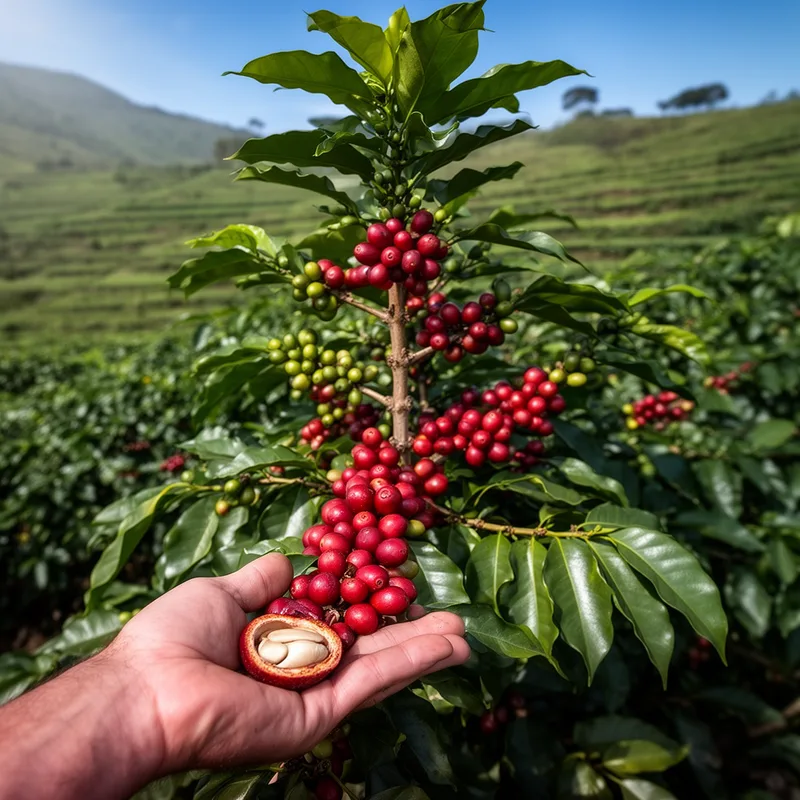
Coffea arabica
- noun
- /kəˈfiːə əˈræbɪkə/
- Specialized
- The finest specialty coffees are often derived from Coffea arabica beans grown at high altitudes.
Examples
-
The plantation specializes in cultivating Coffea arabica for export to premium markets.
-
Many coffee enthusiasts prefer Coffea arabica over other varieties.
-
Because Coffea arabica prefers temperate climates, it thrives in mountainous regions.
-
The Coffea arabica plant thrives in higher altitudes.
-
The finest specialty coffees are often derived from Coffea arabica beans grown at high altitudes.
-
Because Coffea arabica prefers temperate climates, it thrives in mountainous regions.
-
Many coffee enthusiasts prefer Coffea arabica over other varieties.
Synonyms
 1
4.1
1
4.1

A coffee plant that produces beans for good tasting coffee

A tropical plant that produces the beans used to make most of the world's coffee
Surface Forms
Morphology
This is a binomial botanical name in which the first element denotes the coffee genus (Coffea) and the second denotes the species (arabica); if a learner knows both constituents they can compose these meanings to identify a species of coffee plant. The taxonomic naming pattern is regular and cross-linguistically recognizable, so the overall meaning is transparently derived from the parts.
Etymology
Coffea arabica may come from two place names: Coffea from 'Kaffa', an area in Ethiopia where the plant grew, and arabica after Arabia, where traders made the beans famous. So the name points to the plant that gives us 'coffee'.