
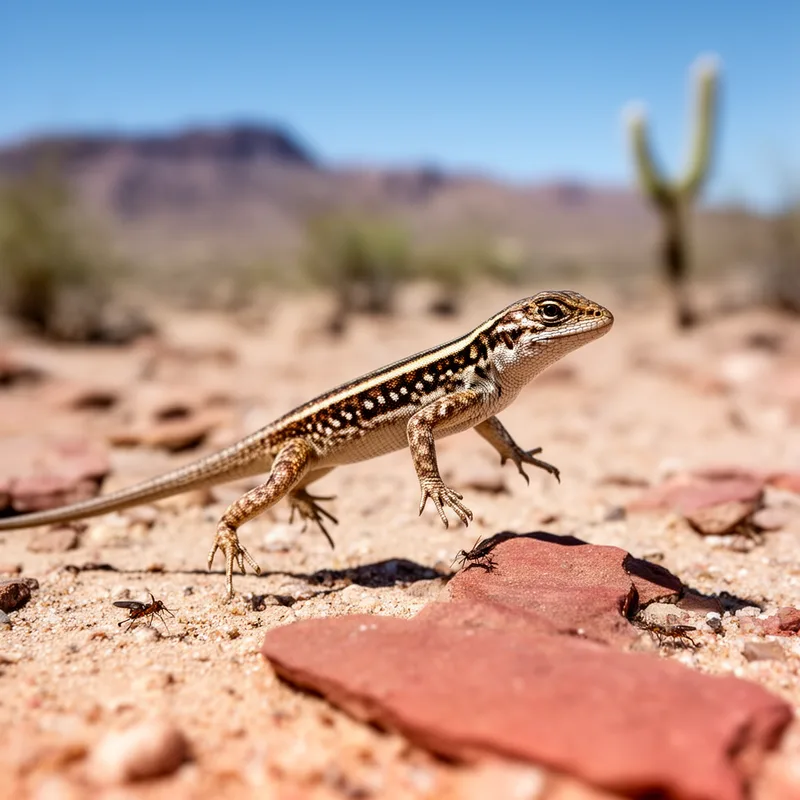
Cnemidophorus exsanguis
- noun
- /ˌnɛmɪˈdoʊfərəs ɛkˈsæŋɡwɪs/
- Specialized
- The Cnemidophorus exsanguis darts quickly across the rocky desert in search of insects.
Examples
-
The Cnemidophorus exsanguis is often seen basking in the sun.
-
Researchers observed that Cnemidophorus exsanguis is active primarily during the warmer parts of the day.
-
Conservationists are studying the habitat requirements of Cnemidophorus exsanguis in the American Southwest.
-
Did you know that the Cnemidophorus exsanguis can change its color slightly?
-
Conservationists are studying the habitat requirements of Cnemidophorus exsanguis in the American Southwest.
-
Researchers observed that Cnemidophorus exsanguis is active primarily during the warmer parts of the day.
-
The Cnemidophorus exsanguis darts quickly across the rocky desert in search of insects.
Synonyms

A small desert lizard from the United States and Mexico with long stripes and light spots
Surface Forms
Morphology
Cnemidophorus + exsanguis
This is a Latin binomial taxonomic name functioning as a proper name rather than a compositional English phrase. A B1 learner—even if they knew 'Cnemidophorus' as a lizard genus—would not be able to derive the species meaning because 'exsanguis' is not a familiar English word (and is absent from the provided dictionary), so the overall meaning is not predictably built from the parts.
Etymology
Cnemidophorus exsanguis comes from old Greek and Latin words. Cnemidophorus points to the lizard's legs or shins and exsanguis means 'pale' or 'bloodless', so the name makes you think of a pale, striped whiptail, the 'little striped whiptail', and helps you remember this fast desert lizard.

