
Clupeidae
- noun
- /kluːˈpeɪdiː/
- Specialized
- Among the 37 families, Carangidae had more than 10 species, Sciaenidae had seven species, Clupeidae, Engraulidae, and Leiognathidae each had four species, and Lutjanidae and Pomadasyidae each had two species. The remaining 30 families were all monospecific.
Examples
-
Menhaden are members of the worldwide family Clupeidae, one of the most important families of fishes both economically (Hildebrand, 1963) and ecologically.
Academic text (1991) -
Members of the Clupeidae family play a significant role in marine ecosystems, especially as a food source for larger fish.
-
Excluding these three families, Sardinella aurita (Clupeidae) showed the highest values of density in all study areas.
Academic text (2018) -
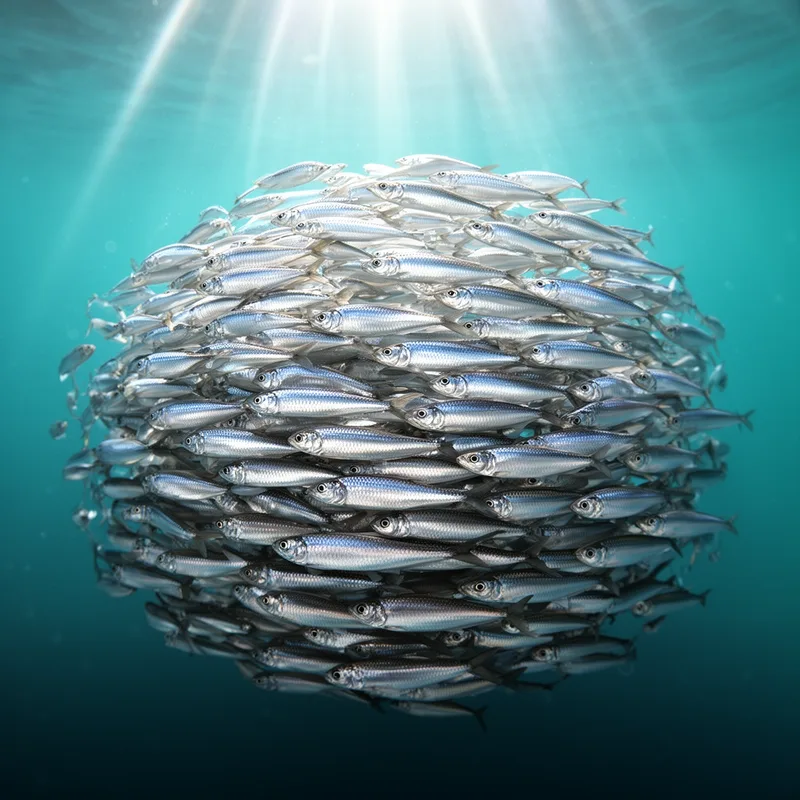
The Clupeidae family includes many types of small, silvery marine fish like herrings and sardines.
-
Fish from the Clupeidae family, such as herring and shad, are commonly found in both oceans and rivers.
Surface Forms
Morphology
Clupeidae = Clupea (opaque) = Clupea + idae
Formed by a Latin genus name plus the scientific family suffix '-idae', which is specialized and not transparently meaningful to an average B1 learner.
Etymology
Clupeidae comes from the Latin clupea, meaning 'round shield', a name later used for the herring, plus the family ending -idae for groups of animals. So picture small, silvery herrings, sardines and shad as little round shields, and that image helps explain why this name fits that family of fish.

