
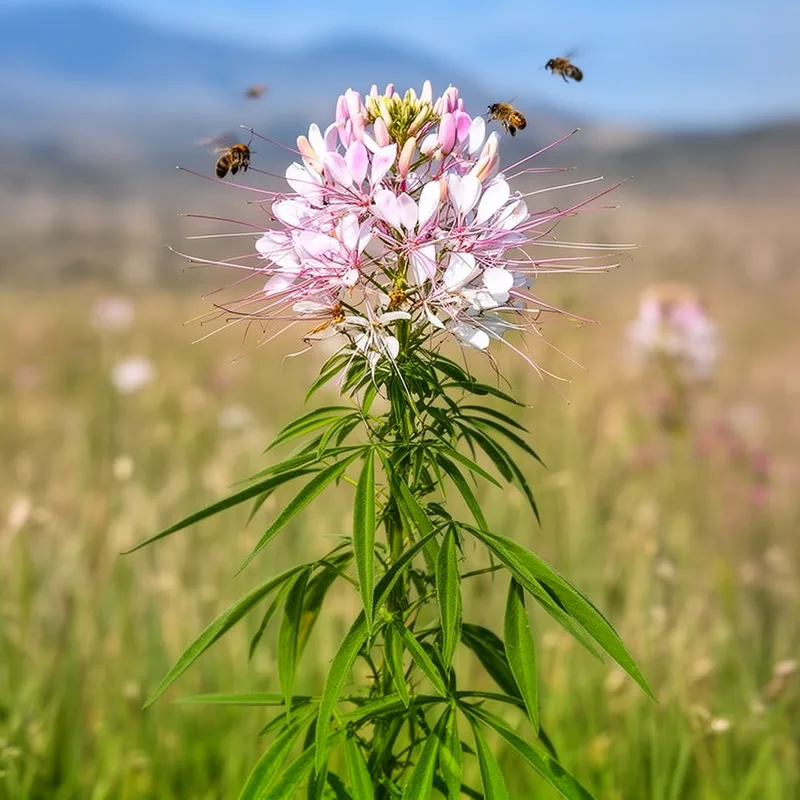
Cleome serrulata
- noun
- Specialized
- The pink flowers of Cleome serrulata attract bees and butterflies.
Examples
-
The garden's wildflower section included a cluster of Cleome serrulata in bloom.
-
I planted a Cleome serrulata in my garden.
-
Researchers documented pollinator visits to Cleome serrulata throughout the summer.
-
Have you seen the Cleome serrulata blooming this spring?
-
The vibrant pink flowers of Cleome serrulata are a beautiful addition to any garden.
-
In the summer, Cleome serrulata attracts numerous pollinators with its unique spider-shaped blossoms.
-
Many gardeners choose to plant Cleome serrulata for its striking appearance and ability to thrive in sunny locations.
Synonyms
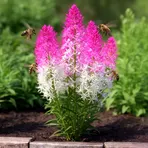
A garden plant with pink or white flowers that attract bees

A plant with leaves in groups of three and small white or pink flowers that smells unpleasant
How Showy


Surface Forms
Morphology
Cleome + serrulata
This is a scientific Latin binomial (genus + species) rather than a compositional English phrase, and the second element 'serrulata' has no common English meaning given here. Even knowing 'Cleome' as a genus does not let a B1 learner infer the species-specific description (leaf shape, flower colour, etc.), so the overall meaning is not derivable from the parts.
Etymology
Cleome serrulata may come from two old words that describe how the plant looks: Cleome for the spider-like flowers with long thin petals, and serrulata from a word meaning 'small saw' that describes the tiny teeth on the leaves. So the name helps you picture the plant's spider-like flowers and toothed leaves.