

Claudius
 16
7.7
16
7.7

- proper noun
- /ˈklɔːdiəs/
- A similar loss occurred in the inscription on the obverse of a medal depicting the emperor Claudius made by Filarete's assistant, Varrone.
- Emperor Claudius
- Claudius's soliloquy
- Hamlet and Claudius
Loading YouTube…
Watch on YouTubeBut then they got Claudius and then they got Caligula.
- But then they got Claudius and then they got Caligula.
- So Claudius, you know, winds up dying.
- Pundits began to compare President Trump to Caligula to Claudius to Caesar.
- Iclaudius, the great BBC series about based on the the two famous novels Iclaudius and Claudius the God.
- And so the I Claudius factors there in a way that it just isn't with the Greek demagogues.
Examples
-
She is the wife of Claudius, the Roman emperor, as perfect mother.
-
Claudius, with confidence and real competence, summarizes the new state of things in Denmark.
Academic text (2002) -
But the Emperor Claudius knew that they were up to something.
-
If anything should ever happen to Caligula, Claudius will become emperor.
-
Thus, Emperor Claudius died and was succeeded by Nero.
-
As the story is told from Claudius's point of view, he naturally comes across as very sympathetic.
Blog text (8) -
As they refused to embark, Claudius sent an ex slave, Narcissus, to urge them on board.
-
A banquet was laid out near the tunnel mouth, with Claudius and Empress Agrapina respondent in cloth of gold in the seats of honor.
-
Then, "throwing himself into the very spirit of the scene," Lincoln recited all 37 lines of Claudius's agonized soliloquy, "O, my offence is rank."
Academic text (2012) -
The Roman Emperor Claudius expanded the empire by conquering southern Britain.
Synonyms

Roman emperor who ruled from 41 to 54 and began taking control of southern Britain

Roman Emperor from AD 41 to AD 54 who led the invasion of southern Britain
Compounds
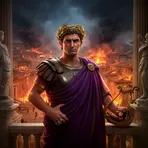
A Roman emperor in the first century known for cruel acts and blamed for the Great Fire of Rome
Surface Forms
Etymology
Claudius comes from the Latin word claudus, which means 'lame' or 'limping'. It is the same root as the name Claude, so the Roman family name began as a nickname for someone with a limp, which helps explain the original sense of the emperor's name.