
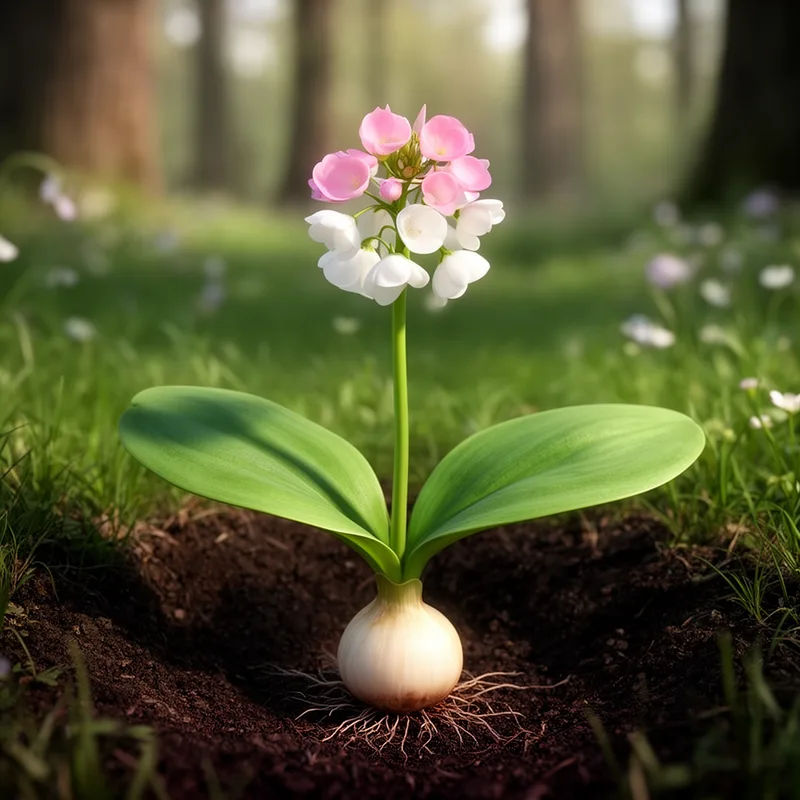
Clatonia lanceolata
- noun
- Specialized
- The bulbs of Clatonia lanceolata are sometimes foraged as a food source in spring.
Examples
-
Botanists admire the delicate blossoms of Clatonia lanceolata found in woodland meadows.
-
Clatonia lanceolata prefers moist, well-drained soil and partial shade for optimal growth.
-
The Clatonia lanceolata is often found in moist woodlands.
-
Have you ever seen a Clatonia lanceolata in bloom?
-
In spring, many hikers search for the edible corms of Clatonia lanceolata in the forest.
-
The striking white flowers of Clatonia lanceolata attract pollinators in the shaded areas of the woodland.
-
Gardeners appreciate Clatonia lanceolata for its unique pair of succulent leaves and colorful blooms.
Synonyms

A small North American plant with two thick leaves, pink or white flowers, and a small edible underground bulb
Surface Forms
Morphology
Clatonia + lanceolata
This is a Latin binomial (scientific) name whose parts are not ordinary English words and are not defined in the provided entries, so there is no compositional semantic link a B1 learner could use. Scientific names function as arbitrary labels (even if 'lanceolata' derives from a Latin root meaning 'lance-shaped', that knowledge is specialized and not available to an average B1 learner), making the expression non-derivable from its constituents.
Etymology
Clatonia lanceolata joins a genus name and a Latin description. The second part, lanceolata, means 'spear-shaped' and gives a clear image of the plant's long narrow leaves, while Clatonia is the name given by the people who first described the plant, so the whole name helps you remember how the plant looks.

