

Citrus medica
- noun
- /ˈsɪtrəs ˈmɛdɪkə/
- Specialized
- The fruits of Citrus medica are prized for their aromatic rind, often used in candied peels.
Examples
-
Gardeners in warm climates may cultivate Citrus medica for both ornamental and culinary purposes.
-
The Citrus medica tree grows well in tropical climates.
-
Some traditional medicines incorporate extracts from the leaves and fruit of Citrus medica.
-
I saw a Citrus medica plant at the botanical garden.
-
Gardeners in warm climates may cultivate Citrus medica for both ornamental and culinary purposes.
-
Some traditional medicines incorporate extracts from the leaves and fruit of Citrus medica.
-
The fruits of Citrus medica are prized for their aromatic rind, often used in candied peels.
Synonyms
 1
7.0
1
7.0

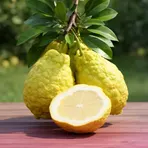
A large lemon-like citrus fruit or the tree it grows on
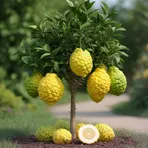
A small thorny tree that makes large fruits like lemons with thick bumpy skin

A large yellow citrus fruit used in cooking or the tree that grows it
Surface Forms
Morphology
Citrus + medica
This is a Latin binomial (scientific name) where 'Citrus' may be recognizable but 'medica' is not an ordinary English word and does not transparently contribute the species meaning. Scientific names function as arbitrary labels for species rather than compositional English phrases, so a B1 learner who knows the constituents would not be able to infer the full sense ('citron' / a specific thorny evergreen tree) without prior exposure or domain knowledge.
Etymology
Citrus medica comes from old words Citrus and medica, and may mean 'citrus' and 'medicine' because people long ago used the thick, scented rind as a medicine. Picture a small, thorny tree with big, lemon-like fruits kept for their strong-smelling peel — that's why the name fits this useful, aromatic fruit.