

Cistus albidus
- noun
- Specialized
- Gardeners prize Cistus albidus for its attractive pink blossoms and drought-resistant qualities.
Examples
-
Botanists noted that Cistus albidus blooms abundantly in late spring.
-
The Cistus albidus thrives in dry, rocky soils.
-
Cistus albidus thrives in dry, rocky soils commonly found in Mediterranean regions.
-
In spring, the Cistus albidus blooms beautifully.
-
Cistus albidus is a popular choice for gardens in Mediterranean climates due to its pink flowers.
-
The Cistus albidus shrub is known for its resilience and ability to thrive in poor soil conditions.
-
Cistus albidus grows well in dry, sunny locations, making it ideal for xeriscaping.
Synonyms
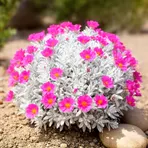
A small bush with white hairy leaves and pink flowers
Surface Forms
Morphology
Cistus + albidus
This is a Latin binomial (genus + specific epithet). If a learner knows 'Cistus' (a rockrose shrub) and the Latin-derived adjective 'albidus' (meaning 'whitish'), they can partially infer it denotes a whitish variety/species of Cistus, but they will not recover the full botanical description or habitat from the parts alone. Because the name is a specialized taxonomic label with only a partial, language-based cue, it is somewhat but not fully transparent to learners.
Etymology
Cistus albidus comes from old Greek and Latin words: Cistus refers to the 'rock-rose' group and albidus means 'whitish'. Because the plant has pale, hairy leaves and pink flowers on dry, rocky hills, the name helps you picture a small rock-rose with pale leaves.

