
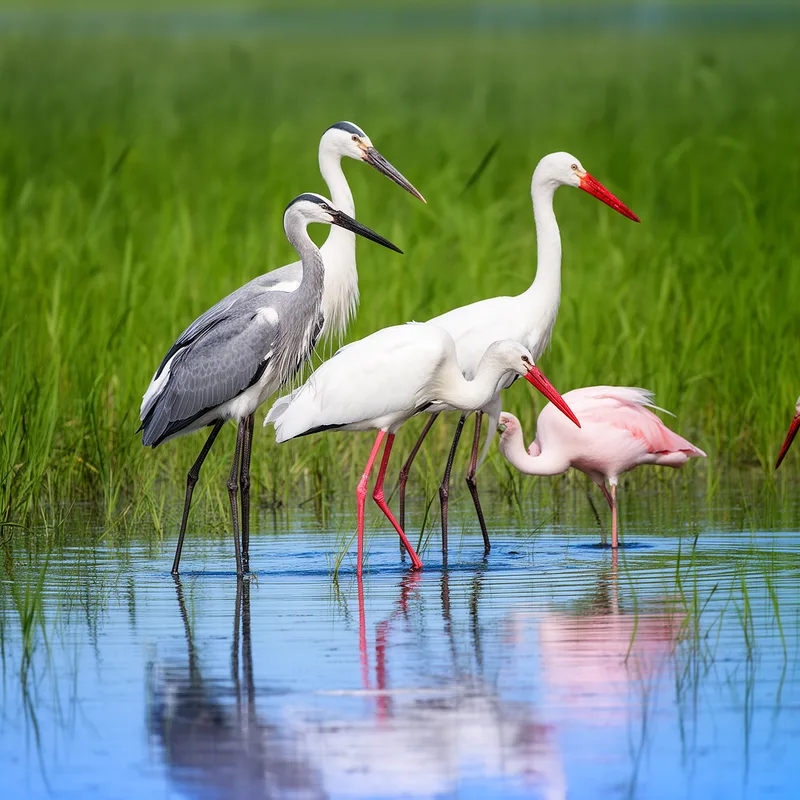
Ciconiiformes
9.9
A group of long-legged birds like herons and storks that live in marshes
- noun
- /ˌsɪkəˈnɪfɔːrmiːz/
- Specialized
:
Ciconiiformes
- Herons and storks are both members of the order Ciconiiformes.
Examples
-
The Ciconiiformes are found in marshes and wetlands around the world.
-
The Ciconiiformes are known for their long legs and bills.
-
Scientists debated the classification of flamingos within the Ciconiiformes.
-
Did you know that Ciconiiformes include flamingos and herons?
-
Herons and storks are both members of the order Ciconiiformes.
-
The Ciconiiformes are known for their long legs and bills.
-
Scientists debated the classification of flamingos within the Ciconiiformes.
Surface Forms
Ciconiiformes singular
Ciconiiformes plural
Etymology
Ciconiiformes comes from the Latin root ciconi- meaning 'stork' and the ending -iformes meaning 'in the shape of', like in uniform. So the name literally means 'stork-shaped' and is used for long-legged, marsh birds such as herons, storks, flamingos and ibises.

