

Chrysopsis villosa
- noun
- Specialized
- Chrysopsis villosa is often found blooming in dry fields across North America during the summer.
Examples
-
Many hikers admire the bright yellow flowers of Chrysopsis villosa in the arid grasslands.
-
The Chrysopsis villosa thrives in dry, sandy soils.
-
Chrysopsis villosa thrives in sandy soils throughout the western United States.
-
Botanists sometimes classify Chrysopsis villosa in a different genus based on its unique features.
-
Have you seen a Chrysopsis villosa in bloom?
-
The bright yellow flowers of Chrysopsis villosa attract many pollinators in its native habitat.
-
In arid regions, Chrysopsis villosa is a common sight due to its drought-resistant nature.
Synonyms
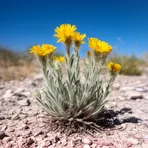
A hairy plant that lives for many years and has bright yellow flower heads in dry areas of North America
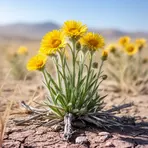
A plant that comes back every year with yellow flower heads and fine hairs, growing in dry places
Surface Forms
Morphology
Chrysopsis + villosa
This is a Latin binomial combining a genus name (Chrysopsis, a daisy-family plant) with a specific epithet; if a learner knew that 'villosa' = 'hairy' (villous), they could infer 'a hairy Chrysopsis species'. However, 'villosa' is not an English lexical item and taxonomic names function as proper nouns, so an average B1 learner who knows only common English vocabulary would not reliably derive the precise meaning without prior exposure.
Etymology
Chrysopsis villosa comes from old Greek and Latin words. The part Chrysopsis means 'golden-looking' and villosa means 'hairy', so the name describes the plant's bright yellow flowers and fuzzy stems.

