
Chlorococcales


 1
9.9
- noun
- /klɔːrəˈkɒkəleɪz/
- Specialized
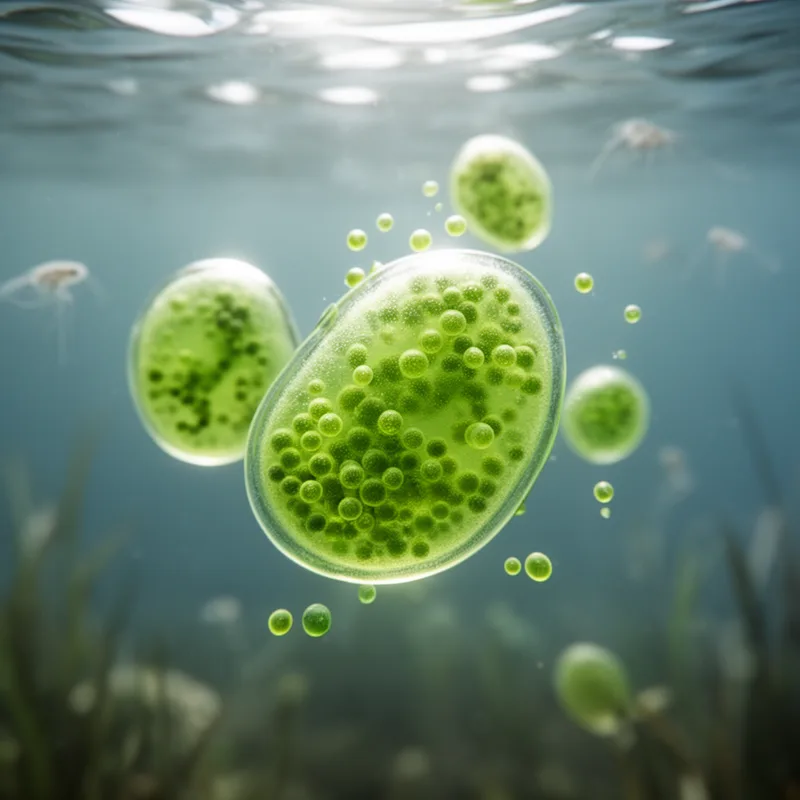
- The Chlorococcales are commonly found in freshwater and form a major part of plankton.
Examples
-
Scientists study Chlorococcales to understand their role in aquatic ecosystems.
-
The Chlorococcales thrive in freshwater environments.
-
Many species within the Chlorococcales reproduce rapidly under favorable conditions.
-
Can you identify the Chlorococcales in this sample?
-
Many species within the Chlorococcales reproduce rapidly in freshwater environments.
-
Scientists study Chlorococcales to understand their ecological importance in aquatic ecosystems.
-
The Chlorococcales are an important component of freshwater plankton communities.
Surface Forms
Morphology
Chlorococcales = Chlorococc (opaque) = chloro + cocc + ales
The term is specialized and scientific, requiring specific biological knowledge to understand its meaning.
Etymology
Chlorococcales comes from Greek parts: chloro- meaning 'green' (as in chlorophyll), -coccus- meaning 'a small round thing' or 'berry', and -ales showing it is a group or order. So, Chlorococcales literally names a group of tiny, round green algae, which fits the freshwater algae the word describes.