
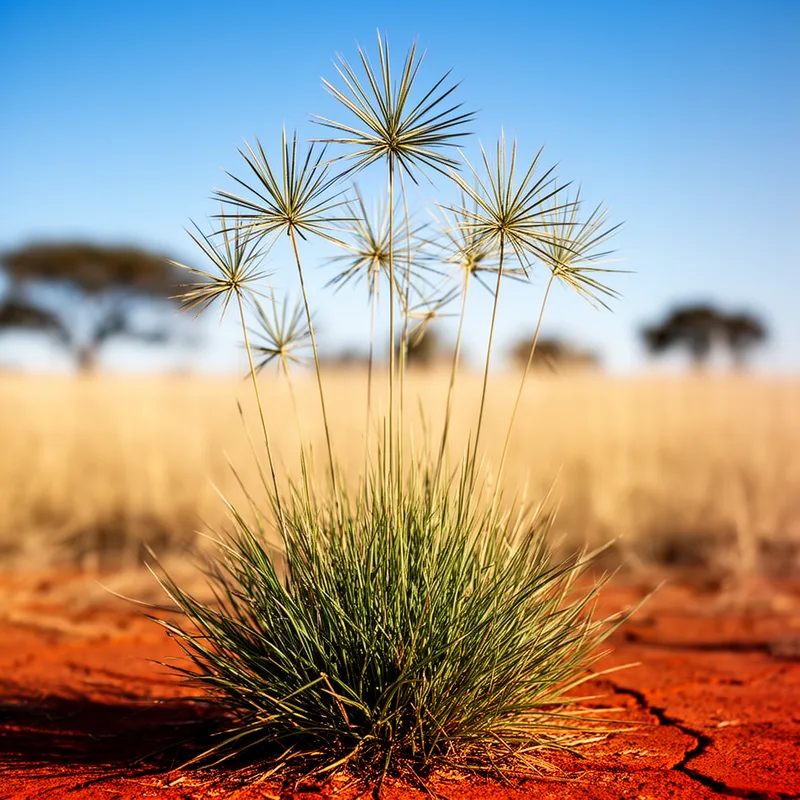
Chloris truncata
- noun
- Specialized
- The distinctive windmill-like spikes make Chloris truncata easy to identify.
Examples
-
The Chloris truncata is commonly found in arid regions of Australia.
-
Chloris truncata is a common sight in the grasslands of southeastern Australia.
-
Farmers value Chloris truncata for its drought-resistant properties.
-
Farmers often use Chloris truncata for pasture improvement.
-
Chloris truncata is known for its characteristic long spikes that resemble the blades of a windmill.
-
In Australia, Chloris truncata thrives in dry grasslands due to its resilience to drought.
-
The unique formation of spikes in Chloris truncata helps it stand out among other grasses.
Synonyms
An Australian grass that lives for many years and has long spikes like a windmill
A grass from Australia that lives for many years and has long spikes from the stalk like a windmill
Surface Forms
Morphology
Chloris + truncata
This is a Linnaean binomial (genus + species) using a Latin adjective: 'Chloris' is a technical genus name and 'truncata' is not an English lexical item in the learner's dictionary. An average B1 learner who knows everyday English words would not be able to derive the specific botanical meaning ('a perennial Australian grass with numerous long spikes') from these specialized/Latin constituents, so the expression is not transparently compositional.
Etymology
Chloris truncata gets its name from two old words: Chloris (meaning 'green') and truncata (meaning 'cut short'). The name gives the image of a green grass with short, windmill-like spikes, which is why it fits this Australian plant.

