
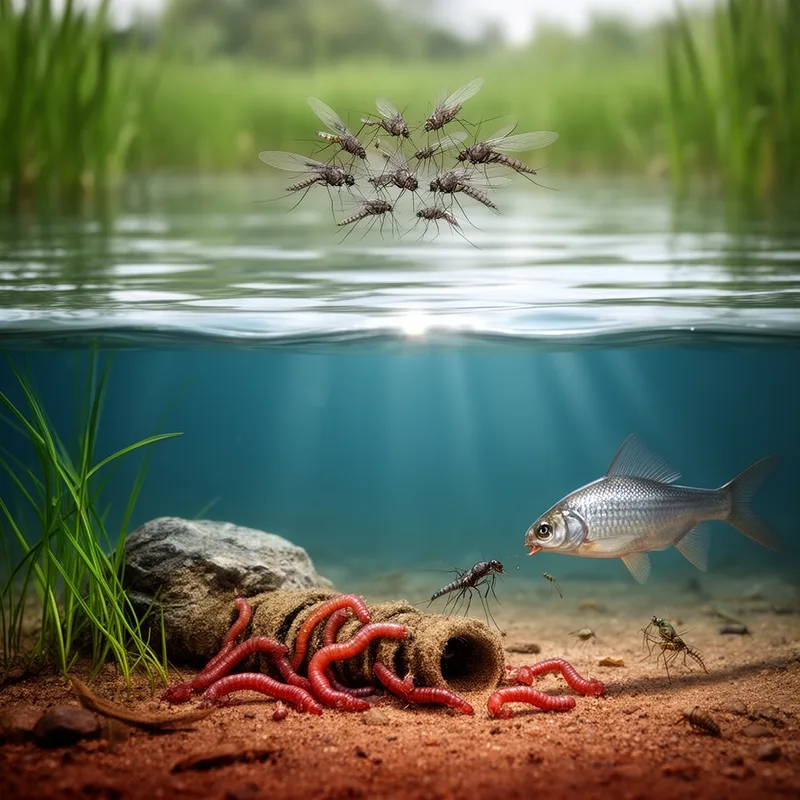
Chironomidae


 1
9.9
- noun
- /ˌkaɪrəˈnɒmɪdi/
- Specialized
- Scientists collected samples of Chironomidae to study water quality in the lake.
Examples
-
The larvae of Chironomidae play a vital role in freshwater food webs.
-
The presence of Chironomidae indicates healthy aquatic environments.
-
The Chironomidae are often mistaken for mosquitoes.
-
Many species of Chironomidae thrive in freshwater environments.
-
The Chironomidae are small flies often seen hovering over lakes and rivers, where they lay their eggs in water.
-
The larvae of the Chironomidae play a crucial role in the ecosystem by serving as food for fish.
-
Many species within the Chironomidae family are commonly found in wetlands and serve as indicators of water quality.
Synonyms
 3
6.1
A very small flying insect often found near water that sometimes bites
 1
9.9
A small non-biting fly that lives near water or its worm-like larva
Surface Forms
Morphology
Chironomidae = Chironomus (opaque) = chironom + idae
This is a technical taxonomic formation (genus name + the scientific family suffix '-idae') that is not helpful for average learners to infer meaning from the parts.
Etymology
Chironomidae comes from the Greek cheironomos, which means 'hand-mover'. A helpful way to remember it is to imagine tiny non-biting water flies waving their legs or antennae like a small dance, and so the name fits this family of small midges that live near water.