
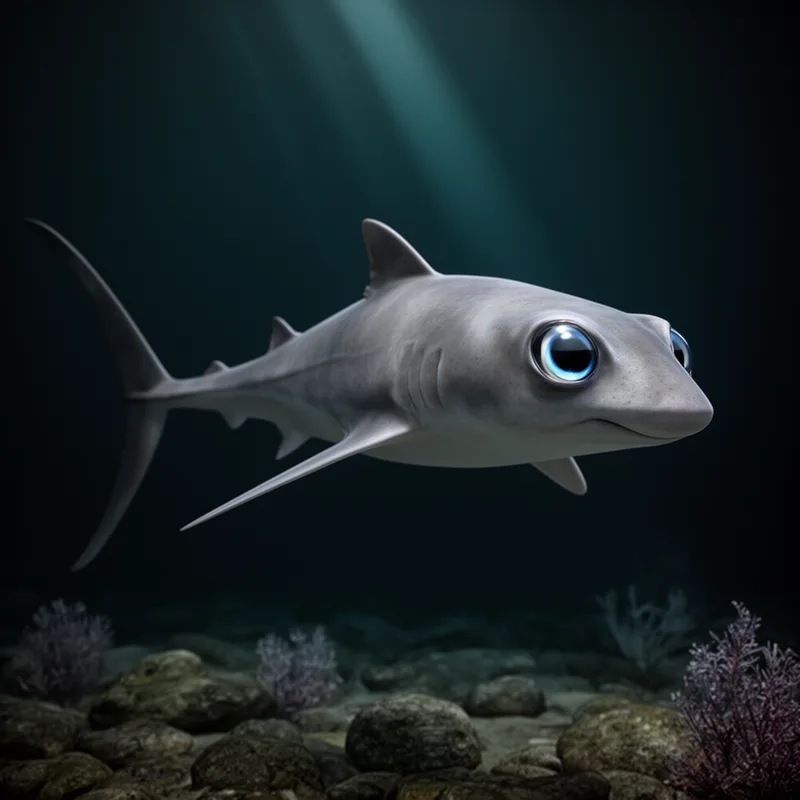
Chimaera monstrosa
- noun
- Specialized
- The unique appearance of the Chimaera monstrosa has earned it the nickname ‘rabbitfish’.
Examples
-
The Chimaera monstrosa is often found at depths below 200 meters in the Atlantic Ocean.
-
Marine biologists recently observed a Chimaera monstrosa near the coast of Portugal.
-
The Chimaera monstrosa is often found in deep waters off the coast of Spain.
-
Have you ever seen a Chimaera monstrosa in its natural habitat?
-
Marine biologists recently observed a Chimaera monstrosa near the coast of Portugal.
-
The Chimaera monstrosa is often found at depths below 200 meters in the Atlantic Ocean.
-
The unique appearance of the Chimaera monstrosa has earned it the nickname ‘rabbitfish’.
Synonyms
 3
9.9

A deep-sea fish like a small shark with a long thin tail

 1
9.9
A large deep sea fish with a long body and big head
Surface Forms
Morphology
Chimaera + monstrosa
This is a Latin binomial composed of non-productive lexical items for a B1 learner, not a compositional English phrase; the parts ('Chimaera' and 'monstrosa') are not standard English words with meanings that combine to indicate 'a large cartilaginous fish'. Even if a learner recognized links to 'chimera' (mythical creature) or 'monstrosa' (monstrous), those associations do not transparently yield the biological meaning, so the expression is unpredictable without prior exposure.
Etymology
Chimaera monstrosa may come from the old story of the chimaera, a creature made of different animals, because this fish from deep water looks like a strange mix with a rabbit-like snout and very large eyes. 'Monstrosa' means 'monstrous' or 'strange', so the name points to its odd look and explains why people call it the 'rabbitfish' today.