
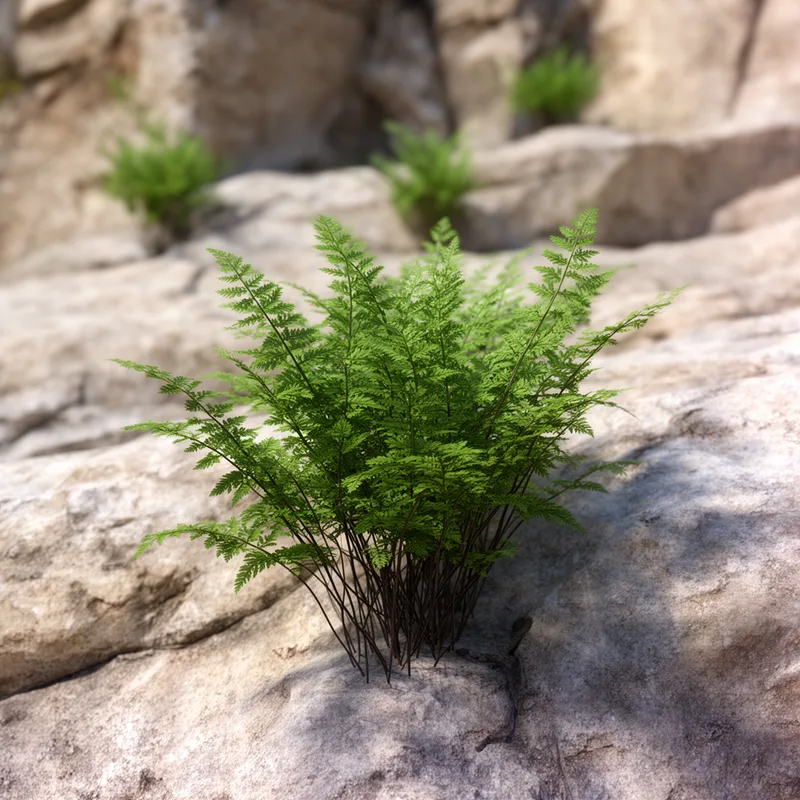
Cheilanthes alabamensis
- noun
- Specialized
- Cheilanthes alabamensis is commonly found growing in dry, rocky areas of the southeastern United States.
Examples
-
Botanists identified the rare Cheilanthes alabamensis in the limestone outcrops of the region.
-
The shaded rock ledges were covered with Cheilanthes alabamensis.
-
Cheilanthes alabamensis is well adapted to dry, rocky habitats in the southeast.
-
The Cheilanthes alabamensis thrives in rocky, well-drained soils.
-
Have you ever seen a Cheilanthes alabamensis in the wild?
-
In the forest, the rare Cheilanthes alabamensis often thrives on shaded ledges among the stones.
-
The Cheilanthes alabamensis fern is recognized for its ability to adapt to arid environments.
Synonyms
A small green plant with smooth edges on its leaves that grows in shady rocky places
A small fern with narrow leaves that grows in dry, shaded places in the southeastern United States
Surface Forms
Morphology
Cheilanthes + alabamensis
This is a standard scientific binomial: 'Cheilanthes' names the genus (a type of fern) and 'alabamensis' is a Latin adjectival epithet signaling origin from Alabama, so the compound literally denotes a Cheilanthes species associated with Alabama. Although the specific epithet is uncommon in everyday English, the formation is regular in biological names (‑ensis = from/of), so a learner who knows the constituents can derive the meaning.
Etymology
Cheilanthes alabamensis comes from old Greek and a place name. Cheilanthes refers to a 'lip' because the fern has a lip-like edge that covers its tiny spores, and alabamensis means 'from Alabama', so the name says it is the 'lip' fern from Alabama and nearby areas.

