
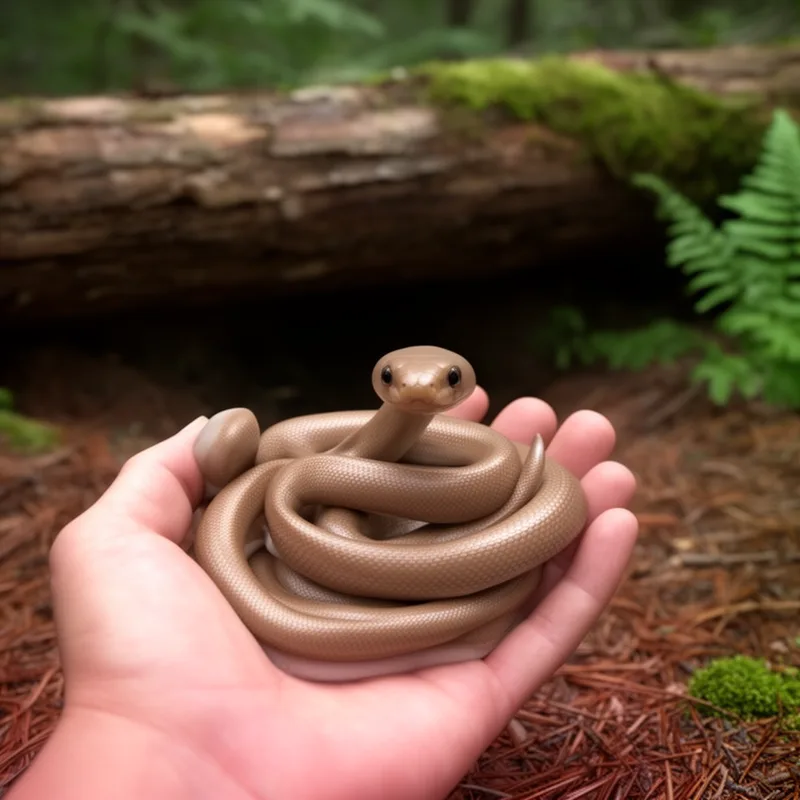
Charina bottae
- noun
- Specialized
- The Charina bottae is often mistaken for a worm due to its smooth, blunt body.
Examples
-
Did you know that the Charina bottae is non-venomous?
-
The Charina bottae is often found in rocky areas.
-
Herpetologists value the Charina bottae for its calm temperament and unique appearance.
-
Researchers found the elusive Charina bottae hiding under a log in the forest.
-
Herpetologists value the Charina bottae for its calm temperament and unique appearance.
-
Researchers found the elusive Charina bottae hiding under a log in the forest.
-
The Charina bottae is often mistaken for a worm due to its smooth, blunt body.
Synonyms

A small harmless snake with smooth, shiny skin and a tail that looks like its head

A harmless pale snake with smooth, rubbery skin that lives in grass and woods
Surface Forms
Morphology
Charina + bottae
The name is a binomial composed of the genus 'Charina' and the specific epithet 'bottae'; a learner who knows 'Charina' as a genus of non-venomous boas can therefore infer this refers to a species of that snake. However, 'bottae' is a Latin epithet (not a normal English lexical item and not in the dictionary) and provides no transparent descriptive meaning, so the full, specific senses (e.g., small, smooth appearance) are not derivable without prior knowledge.
Etymology
Charina bottae may come from bottae, taken from a scientist named Botta, and from Charina, an old word for 'small boa'. Because the snake has a smooth, rubbery body and a blunt head and tail that can look the same, the name fits, so today it refers to this calm, not-poisonous snake.

