
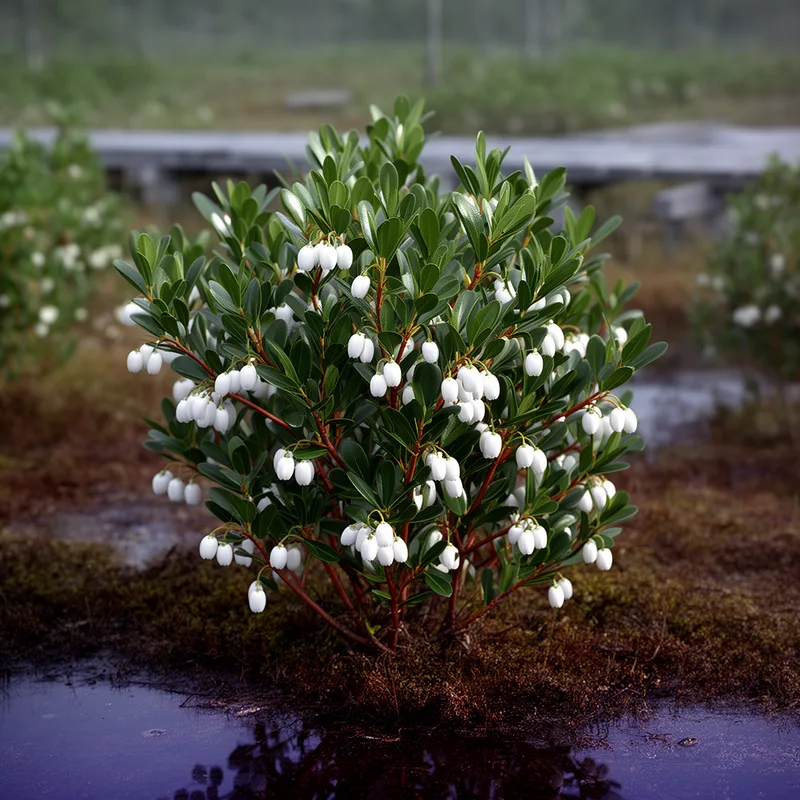
Chamaedaphne calyculata
- noun
- Specialized
- The leathery leaves of Chamaedaphne calyculata help it thrive in cold, acidic bogs.
Examples
-
The wetland was dotted with patches of Chamaedaphne calyculata along the boardwalk.
-
Botanists surveyed the population of Chamaedaphne calyculata to monitor changes in the ecosystem.
-
The Chamaedaphne calyculata thrives in wet, acidic soils.
-
Many gardeners appreciate the Chamaedaphne calyculata for its unique appearance.
-
The leathery leaves of Chamaedaphne calyculata help it thrive in cold, acidic bogs.
-
The wetland was dotted with patches of Chamaedaphne calyculata along the boardwalk.
-
Many gardeners appreciate the Chamaedaphne calyculata for its unique appearance.
Synonyms
A low evergreen shrub with tough leaves and small white flowers that grows in bogs
Surface Forms
Morphology
Chamaedaphne + calyculata
This is a Latin binomial scientific name (genus + species) rather than a phrase built from common English words; the constituents are specialized/unknown to a B1 learner (the species epithet is not a recognizable English word). Even if one recognizes the pattern 'genus + species', the literal meanings of the parts do not allow a learner to infer the shrub description, so the expression is not compositional for general learners.
Etymology
Chamaedaphne calyculata comes from old Greek and Latin words: Chamae- meaning 'low' or 'on the ground', -daphne meaning 'laurel', and calyculata meaning 'small cup'. These words give a clear picture of a low, laurel-like shrub with tiny cup-shaped parts around its flowers, so the name fits the plant today.

