
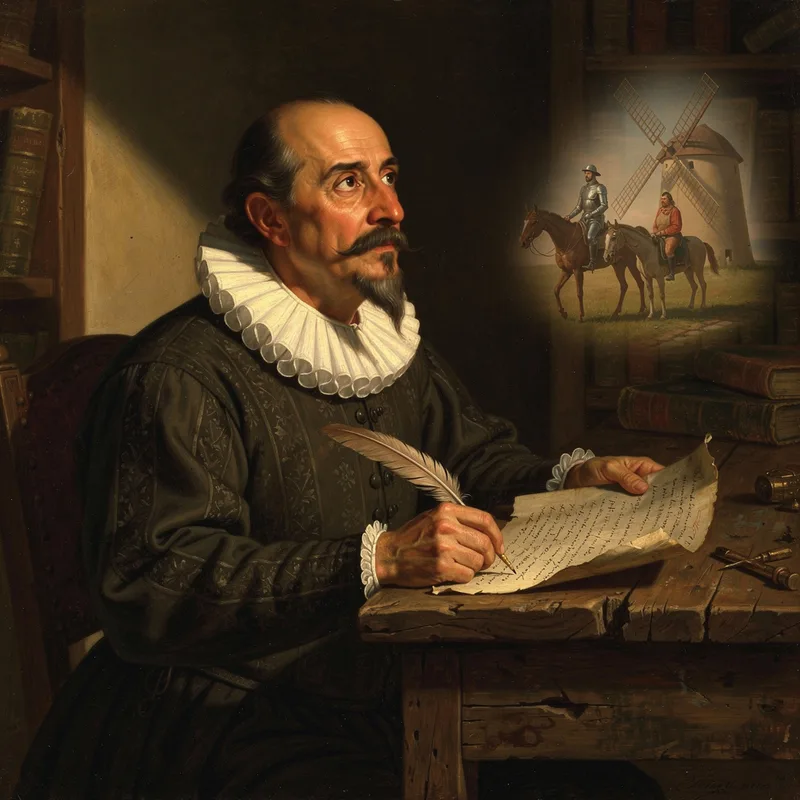
Cervantes
 11
4.8

- proper noun
- /sərˈvæntɪz/
- Literature
- In short, Cervantes has turned the traditional figure into a veritable replication of Don Quijote/Alonso Quijano.
- Cervantes' novel
- Cervantes' version
Examples
-
In parodic confrontation with this model, Cervantes presents his readers with a protagonist whose attractiveness is visible and accessible.
Academic text (1994) -
Miguel de Cervantes is widely regarded as one of the greatest writers of the Spanish language.
-
Just as in real life, Cervantes included his novel success in the world of his characters.
-
If true, Cervantes would again merely develop what was already present in his models.
Academic text (1993) -
I have come to understand why my father treasured Cervantes and Fielding.
Fiction book (2000) -
In both Cervantes and the medieval authors, the hero passes the more difficult test, but not unscathed.
Academic text (1993) -
I agree with your thoughts on Cervantes' use of books symbolically in Don Quixote.
Blog text (9) -
In the final scene of Cervantes' play La Numancia, the young boy, Bariato, commits suicide.
Academic text (1993) -
Consequently, Cervantes was unable or unwilling to explore the logical impasses that his parody had laid bare.
Academic text (1994) -
Profoundly cognizant of his texts, Cervantes was therefore more than attuned to symbolic interpretations.
Academic text (1993)
Synonyms
Spanish writer who wrote Don Quixote, a novel that makes fun of old ideas about knights
A Spanish writer who wrote Don Quixote and helped create the modern novel
Surface Forms
Etymology
Cervantes probably comes from the old Latin word cervus, which means 'deer' or 'stag' and may have started as a place or family name linked to deer. A helpful way to remember the writer Cervantes, author of 'Don Quixote', is to imagine a deer, which makes the name easier to recall.