
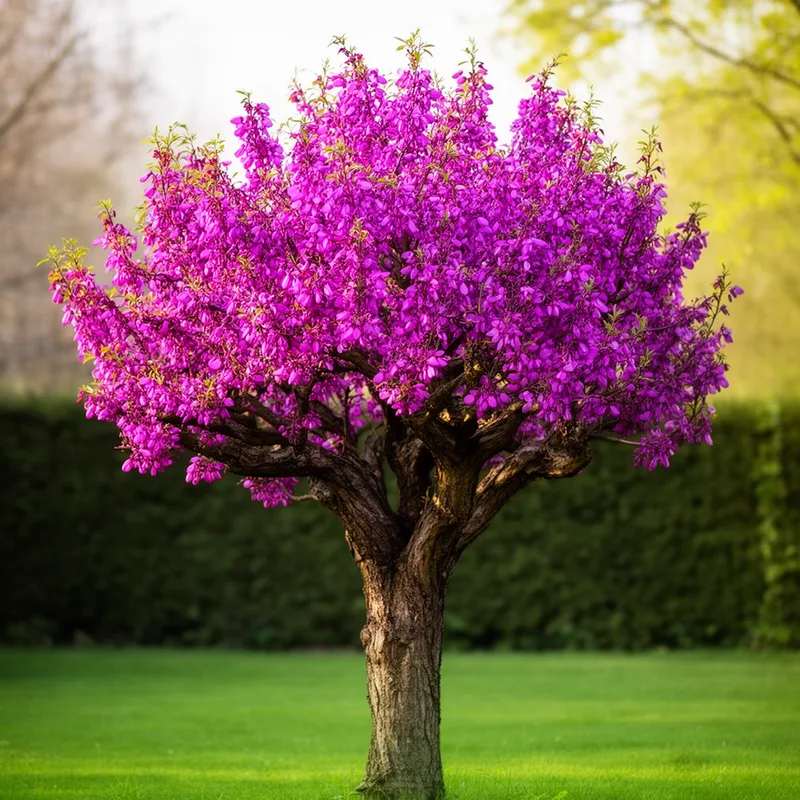
Cercis siliquastrum
- noun
- Specialized
- Visitors admired the brilliant blossoms covering the old trunks of the Cercis siliquastrum.
Examples
-
The Cercis siliquastrum is often planted in gardens for its striking floral display each spring.
-
The Cercis siliquastrum blooms beautifully in spring.
-
Wood from the Cercis siliquastrum is valued for its use in fine veneers.
-
Have you ever seen a Cercis siliquastrum in full bloom?
-
The Cercis siliquastrum is known for its stunning display of purplish-red flowers that bloom before the leaves.
-
In the park, the Cercis siliquastrum tree dazzled visitors with its vibrant flowers appearing directly from the old wood.
-
Gardeners love to choose the Cercis siliquastrum for its early spring blooms that add color to landscapes.
Synonyms

A small tree from the eastern Mediterranean with many purplish-red flowers on its trunk and branches before the leaves appear

A small tree with bright purplish-red flowers that grow on its stems before leaves appear
Surface Forms
Morphology
Cercis + siliquastrum
This is a Latin binomial (scientific name) rather than a compositional English phrase: knowing 'Cercis' only indicates the genus (redbuds) but the species epithet 'siliquastrum' is not an English word and gives no transparent semantic content to a B1 learner. Scientific names are language-neutral labels that identify taxa but do not allow learners to infer the descriptive meaning (small Mediterranean tree with purplish-red flowers) from the constituents.
Etymology
Cercis siliquastrum may come from old words where Cercis suggests a sewing 'shuttle' and siliquastrum points to a 'pod', because the tree makes long, bean-like pods and bright flowers that grow right on its old wood before the leaves. So the name gives a clear picture of this small tree known for its early purple-red blossoms and pods.

