
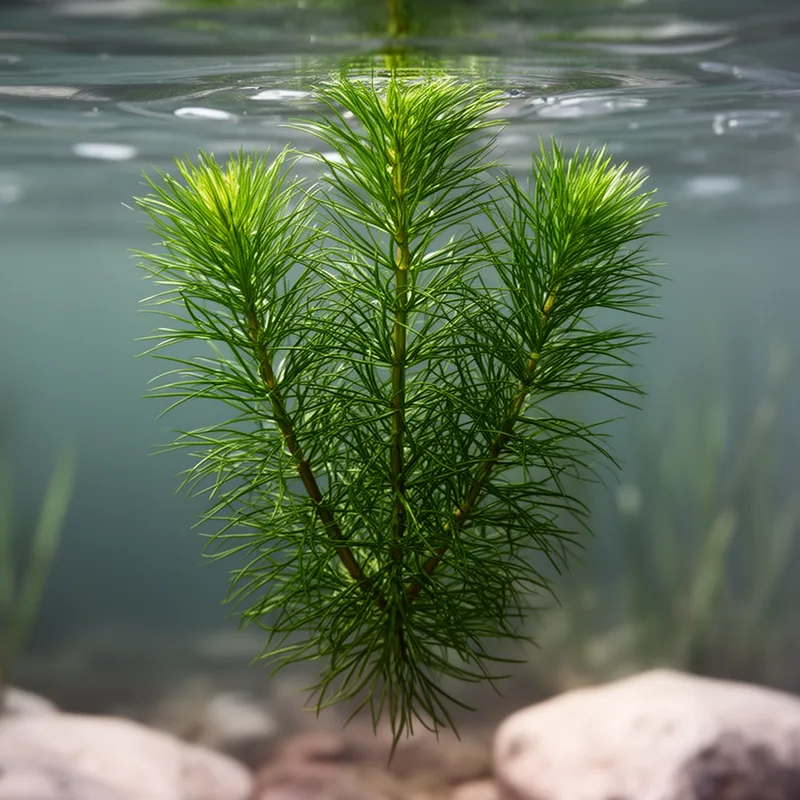
Ceratophyllum
- noun
- Specialized
- Ceratophyllum is often found floating freely in freshwater ponds and lakes.
Examples
-
The horn-shaped leaves of Ceratophyllum make it easy to identify among aquatic plants.
-
Many aquarists use Ceratophyllum to help control algae in their aquariums.
-
The Ceratophyllum plant grows rapidly in warm waters.
-
Many aquarists use Ceratophyllum for natural filtration.
-
Ceratophyllum thrives in nutrient-rich waters, providing habitat for various aquatic organisms.
-
In many aquariums, Ceratophyllum is favored for its ability to absorb excess nutrients and improve water quality.
-
Ceratophyllum can reproduce both sexually and vegetatively, allowing it to spread quickly in suitable environments.
Synonyms

A water plant that grows underwater in ponds and slow streams

A family of water plants that grow in fresh ponds and lakes

A group of flowering water plants called hornworts that live underwater without roots
Surface Forms
Etymology
Ceratophyllum comes from Greek cerato- 'horn' and phyllum 'leaf', giving the idea 'horn-leaf'. That is why these aquatic plants are called hornworts: their leaves have a horn-like shape.

