

Cerambycidae
- noun
- /ˌsɛrəmˈbɪsɪˌdeɪ/
- Specialized
- PHOTO (COLOR): Cerambycid beetles (family Cerambycidae) related to the exotic Asian longhorned beetle, in the genus Anoplophora.
Examples
-
The scientist studied the fascinating Cerambycidae family of beetles, known for their exceptionally long antennae.
-
Areas of expertise in the latter include worldwide jewel beetles (Buprestidae) and North American longhorned beetles (Cerambycidae).
Blog text (29) -
In the forest, we observed several species belonging to the Cerambycidae family, each displaying unique markings.
-
During the entomology workshop, participants were introduced to the Cerambycidae, famous for their long-horned appearance.
Synonyms

 1
7.4
1
7.4

A beetle with very long antennae often longer than its body

A group of beetles with very long antennae often called long-horned beetles
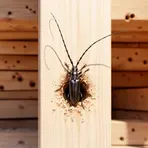
A beetle with a long body and very long antennae that often makes holes in wood

A beetle with a long body and very long antennae often longer than its body
Compounds
- Specialized
A group of beetles with very long antennae often called long-horned beetles
Surface Forms
Morphology
Cerambycidae = cerambycid (opaque) = cerambyc + idae
Formation uses a specialized taxonomic suffix (-idae) on a non-standalone stem to form a scientific family name, which is not interpretable by average learners.
Etymology
Cerambycidae comes from the old Greek word kerambyx, which meant 'a horned beetle', and the ending -idae means 'family' in scientific names. So Cerambycidae literally names the 'family of horned beetles', a helpful way to remember why these insects have very long, horn-like antennae.