
Cepphus grylle
- proper noun
- Specialized
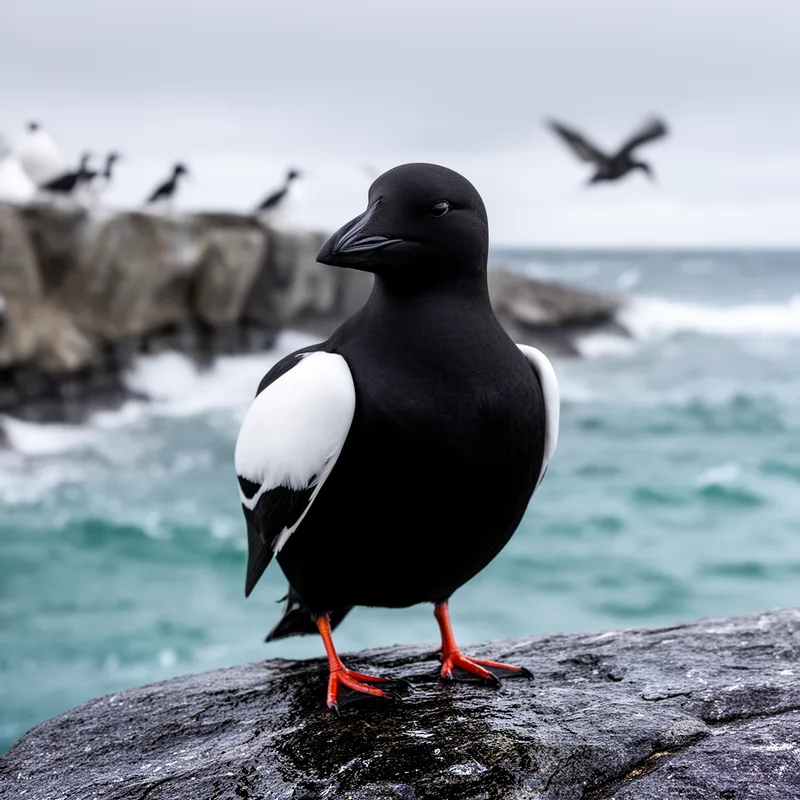
- The Cepphus grylle, commonly known as the black guillemot, can be seen diving for fish in the northern Atlantic.
Examples
-
The Cepphus grylle is easily recognized by its black plumage and distinctive white wing patches.
-
Researchers observed a flock of Cepphus grylle nesting along the rocky coastline.
-
During winter, the Cepphus grylle migrates to more sheltered coastal waters.
-
The Cepphus grylle is often seen near rocky shores.
-
Have you ever spotted a Cepphus grylle in the wild?
-
During summer, the Cepphus grylle displays its striking white wing patches while foraging along the rocky coast.
-
Birdwatchers eagerly await the arrival of the Cepphus grylle as it returns to its nesting sites in the cliffs.
Synonyms

A medium-sized seabird with mostly black feathers and white patches on its wings
Surface Forms
Morphology
Cepphus + grylle
This is a Latin binomial (proper name) used as a taxonomic label for a species; such names function as arbitrary identifiers rather than compositional phrases. Knowing 'Cepphus' (a group of seabirds) does not allow a learner to infer the specific species sense encoded by 'grylle' (which is not a transparent English word), so the overall meaning is not derivable from the parts.
Etymology
Cepphus grylle may come from old words sailors used for a small sea bird: Cepphus likely comes from an ancient Greek name for a sea bird, and grylle comes from old northern words sailors used for the dark, noisy guillemot. So the two parts together point to the 'black guillemot' we know today.

