
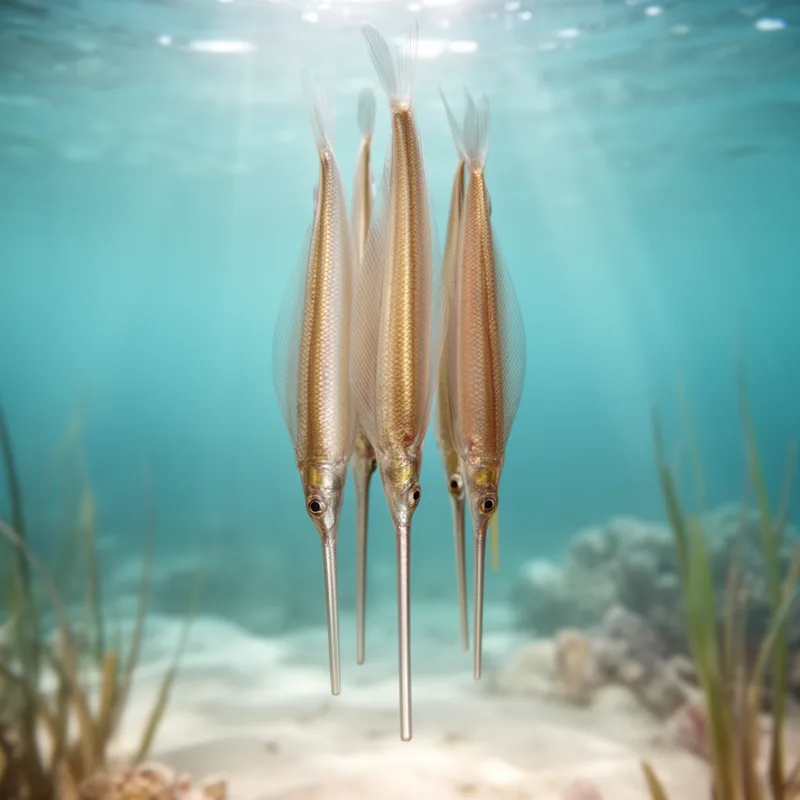
Centriscidae
- noun
- /ˌsɛntrɪˈskaɪdi/
- Specialized
- Centriscidae are known for their unusual way of swimming vertically, head downward.
Examples
-
Marine biologists often study Centriscidae to learn about adaptive camouflage in fish.
-
The family Centriscidae includes species found in shallow coastal waters of the Indo-Pacific region.
-
Look at that Centriscidae!
-
The Centriscidae family includes various species of shrimpfishes.
-
Centriscidae are small fish that swim vertically, often seen hovering in coral reefs.
-
The unique body shape of Centriscidae allows them to blend into their surroundings while swimming upside down.
-
Researchers have noted that Centriscidae thrive in warm, shallow waters near shorelines.
Synonyms



 1
9.9
A thin tropical fish with clear plates that swims upright like seagrass

A small tropical fish with a thin body and clear plates that make it hard to see
Surface Forms
Morphology
Centriscidae = Centriscus (opaque) = centriscus + idae
The suffix '-idae' is a specialist taxonomic marker (family) and is not transparently meaningful to an average B1 learner.
Etymology
Centriscidae comes from a Greek word kentriskos meaning 'small sharp point'. It shares the same root as the word center, which originally meant a 'point'. That fits these fish because their long, tube-like snouts make them look like thin spikes when they swim head down, so the name reminds us of their pointed shape.