
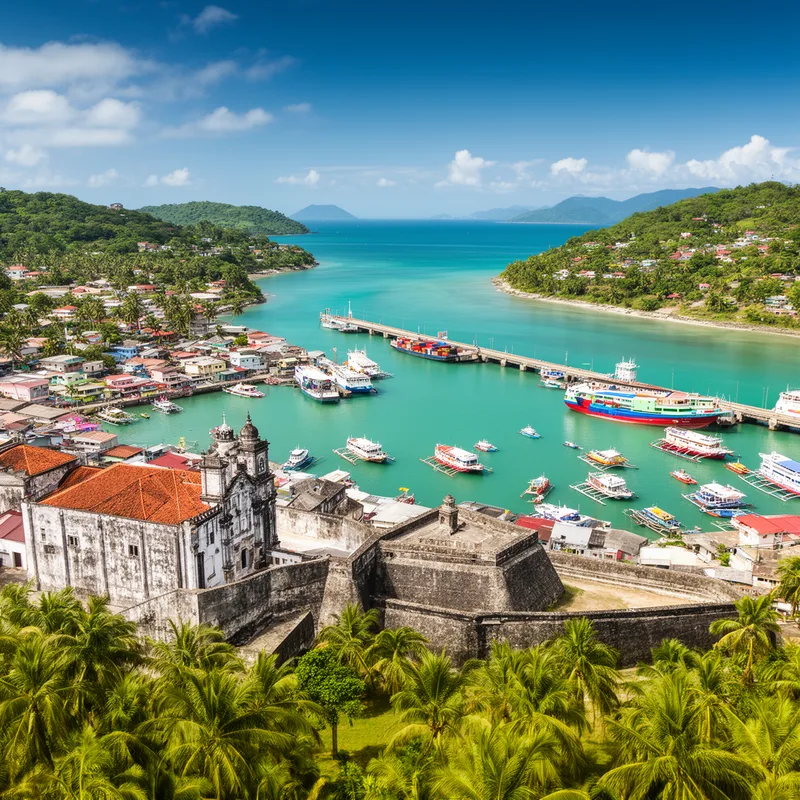
Cebu
- proper noun
- In the uplands of Cebu, some sort of equilibrium seems to have been achieved.
Examples
-
Given the topography and intense rainfall, natural erosion on Cebu would be expected even without human activity.
Academic text (1994) -
Limestone is present in all the municipalities of Cebu and is widely mined as a building material.
Academic text (1994) -
The second main crop of Cebu is coconuts.
Academic text (1994) -
The population density of Cebu Province was 520 persons per square kilometer in 1990.
Academic text (1994) -
Because of the sheltered position of the island in the archipelago, Cebu receives less rainfall than other parts of the Philippines.
Academic text (1994) -
In sum, the island of Cebu was subjected to severe environmental stress in the past, but conditions seem to be stabilized, and deterioration is not worsening.
Academic text (1994) -
Approximately 68 percent of the land in Cebu Province has a slope of 18 percent or more, and half has a slope greater than 30 percent (Bureau of Soils and Water Management c. 1985).
Academic text (1994) -
Large marble quarries are found in the central highlands of Cebu, where the largest mine in Southeast Asia, the copper mine of Atlas Consolidated in Toledo, is located.
Academic text (1994) -
Besides exploring Thailand and Hong Kong, we went all over the Philippines - from the pristine white beaches of Cebu to the verdant rice terraces of Banaue and the lush rainforests in between.
Blog text (32) -
Cebu is known for its beautiful beaches and vibrant culture in the central Cebu.
Compounds


- Philippine
A strong plant fiber from the Philippines used to make coarse rope and sacks
Surface Forms
Etymology
Cebu comes from the old local name Sugbo, said to mean 'to wade' or 'to march', a simple image of people and boats moving in shallow water. That idea fits the island's long role as a busy harbor and trading place, which is why the island is called Cebu.

