
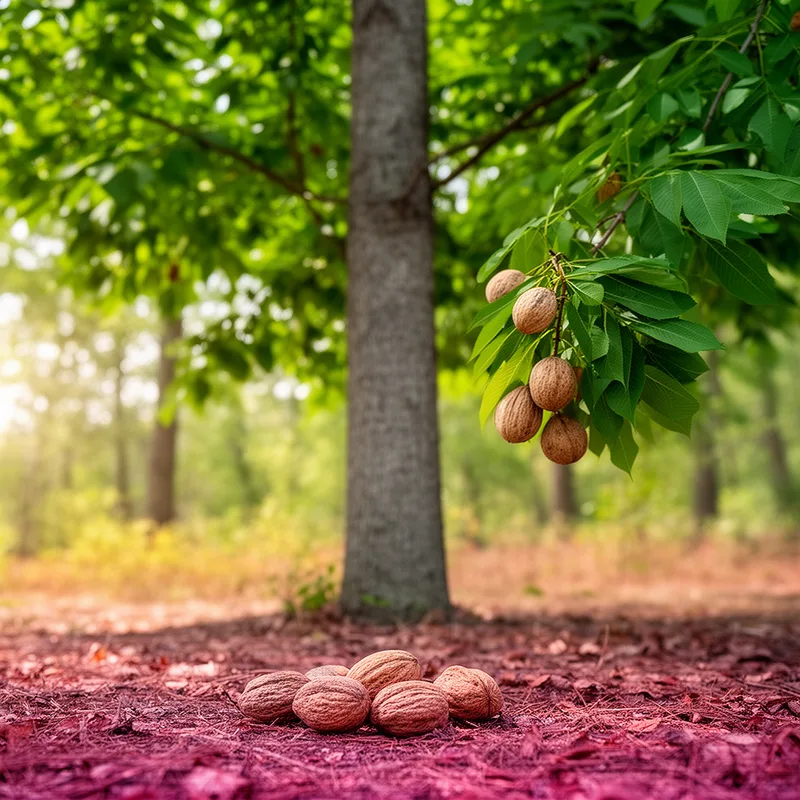
Carya myristiciformis
- noun
- Specialized
- The Carya myristiciformis produces nuts that are similar in shape to nutmeg seeds.
Examples
-
The wood from Carya myristiciformis is valued for its strength and durability.
-
Botanists recently discovered a large stand of Carya myristiciformis in eastern Texas.
-
The Carya myristiciformis tree thrives in warm climates.
-
Have you ever seen a Carya myristiciformis in the wild?
-
The Carya myristiciformis tree thrives in warm climates, making it common in southern United States.
-
The Carya myristiciformis produces nuts that are similar in shape to nutmeg seeds, which are used in cooking.
-
Botanists recently discovered a large stand of Carya myristiciformis in eastern Texas, highlighting its significance in local ecosystems.
Synonyms

A type of hickory tree from the southern United States and Mexico that makes hard nuts shaped like nutmeg
A tree from the southern United States and Mexico that has hard nuts shaped like nutmeg
Surface Forms
Morphology
Carya + myristiciformis
This is a scientific binomial: 'Carya' clearly names the hickory genus so that constituent gives a clear cue, but 'myristiciformis' is a Latinized descriptor (likely meaning 'nutmeg‑shaped') that is not in the learner dictionary and relies on botanical/Latin morphology. An average B1 learner who only knows common English words would not reliably parse the Latin element, so the meaning is only partly inferable from the parts and depends on specialized knowledge.
Etymology
Carya myristiciformis comes from two parts: Carya meaning 'nut' and myristiciformis meaning 'nutmeg-shaped'. So the name describes a hickory tree that makes hard, 'nutmeg-shaped' nuts.

