

Capparis spinosa
- noun
- Specialized
- The flower buds of Capparis spinosa are harvested and pickled to become the familiar capers.
Examples
-
Capparis spinosa thrives in dry, rocky soils of the Mediterranean region.
-
I love adding Capparis spinosa to my pasta dishes.
-
Botanists often study Capparis spinosa for its unique adaptation to arid climates.
-
Have you ever tried Capparis spinosa in a salad?
-
The flower buds of Capparis spinosa are harvested, pickled, and used as capers in many recipes.
-
In Mediterranean cuisine, dishes often feature Capparis spinosa to enhance their flavor with capers.
-
Many chefs appreciate the unique taste of Capparis spinosa when preparing seafood dishes.
Synonyms

 15
6.7
15
6.7

A small pickled flower bud people add to food for a sharp taste
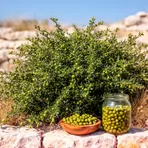
A spiny bush from the Mediterranean grown for its pickled flower buds
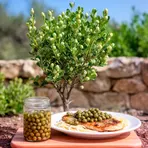
A small bush whose pickled flower buds are used in cooking
Surface Forms
Morphology
Capparis + spinosa
The binomial combines a genus name ('Capparis' = shrub) with a Latin epithet ('spinosa' = spiny), so if a learner knows both constituents they can infer the core sense 'a spiny Capparis shrub'. However, species epithets are Latin and taxonomic naming is a specialized register (and the culinary detail that its buds are pickled as capers is not derivable from the parts), so the meaning is only partially transparent to typical B1 learners.
Etymology
Capparis spinosa is the plant's scientific name. The second word spinosa means 'spiny', so the name creates the image of a low, prickly bush whose small green flower buds people pick and pickle as 'capers'.