
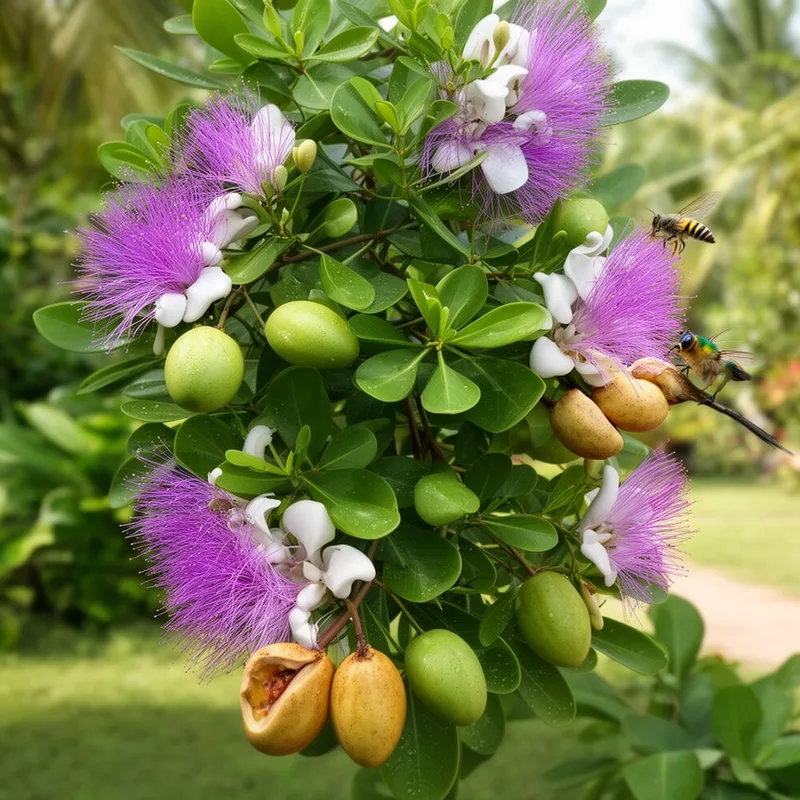
Capparis cynophallophora
- noun
- Specialized
- The Capparis cynophallophora is often planted in tropical gardens for its attractive blossoms.
Examples
-
Ecologists are studying the role of Capparis cynophallophora in supporting native pollinators.
-
Fruit from the Capparis cynophallophora is sometimes eaten by birds in its native habitat.
-
The Capparis cynophallophora is often found in coastal areas.
-
Have you ever seen a Capparis cynophallophora in bloom?
-
The Capparis cynophallophora produces fragrant flowers that attract many pollinators.
-
In the tropical gardens, the Capparis cynophallophora thrives and showcases its beautiful blooms.
-
Birds frequently enjoy the edible fruit of the Capparis cynophallophora in their natural environment.
Synonyms
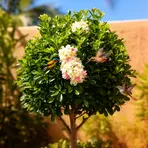
A small tree or shrub with shiny leaves and sweet-smelling flowers from warm places like Florida and the West Indies
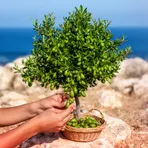
A small tree or shrub that has edible flower buds and fruit
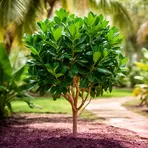
A small tree or bush with leaves like a bay tree used in tropical gardens
Surface Forms
Morphology
Capparis + cynophallophora
This is a Latin binomial (scientific name) where the second element 'cynophallophora' is not an English word and has no transparent, compositional meaning for a B1 learner; scientific epithets function as arbitrary labels rather than predictable combinations. Knowing 'Capparis' as a genus does not let a learner infer the common-name meaning (Jamaican caper), so the expression is not derivable from its constituents.
Etymology
Capparis cynophallophora may come from the caper group Capparis plus the second part cynophallophora, a name that once made people think of a 'dog-like shape' in its buds or fruit, so it became known as the 'Jamaican caper'. That's why the name refers to a caper shrub with fragrant flowers and edible fruit.

