

Canticle of Simeon
- noun
- /ˈkæntɪkəl əv sɪˈmiːən/
- Literature
- The choir ended the service by singing the Canticle of Simeon as the congregation listened in silence.
Examples
-
Many churches recite the Canticle of Simeon during evening prayers or at funerals.
-
The Canticle of Simeon expresses gratitude and peaceful acceptance at the end of life.
-
The Canticle of Simeon is recited during evening prayers.
-
Have you heard the Canticle of Simeon sung at church?
-
Many churches recite the Canticle of Simeon during evening prayers.
-
The Canticle of Simeon is often included in the liturgy of Christmas services.
-
The choir concluded the worship with the Canticle of Simeon, bringing a sense of peace to the congregation.
Synonyms
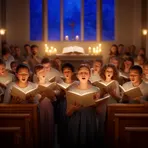
A short church song from the Bible that people sing at evening prayer to show thanks and peace
Surface Forms
Morphology
The phrase is compositional: 'canticle' means a religious song or hymn and 'of Simeon' indicates possession or association, so a learner who knows the constituents can infer it is a hymn or prayer associated with Simeon. Specific liturgical or biblical details (e.g. the Luke passage) are not derivable, but the core meaning 'Simeon's hymn/prayer' is directly inferable from the parts.
Etymology
Canticle of Simeon comes from a short song in the Bible where an old man named Simeon sees the baby Jesus and says he can now 'depart in peace' because he has seen God's promise. That's why the name means a short 'prayer' or 'hymn' often used in evening services or at funerals to show thanks and peaceful acceptance at the end of life.

