
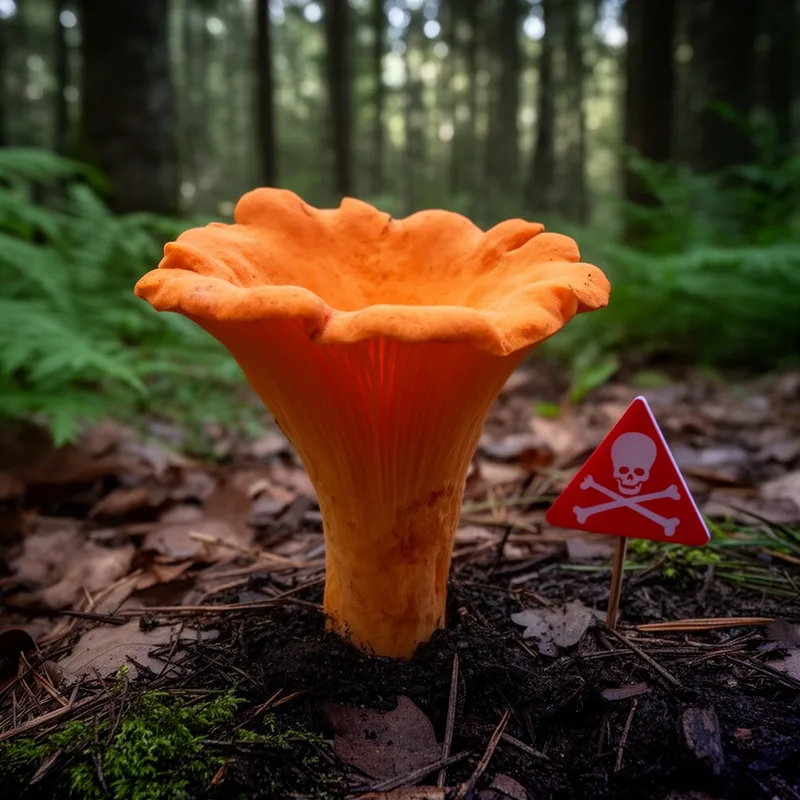
Cantharellus floccosus
- noun
- Specialized
- Mushroom guides warn of the mildly poisonous nature of Cantharellus floccosus.
Examples
-
The forest floor was dotted with Cantharellus floccosus, their orange caps standing out among the leaves.
-
The Cantharellus floccosus is known for its trumpet-like shape.
-
Because Cantharellus floccosus can cause stomach upset, foragers are advised not to eat them.
-
Look at the Cantharellus floccosus!
-
For safety reasons, it is important to avoid eating Cantharellus floccosus, as it can cause mild poisoning.
-
Many outdoor enthusiasts learn about Cantharellus floccosus to recognize its distinct hollow, trumpet-shaped body.
-
While hiking in the woods, I spotted several Cantharellus floccosus, reminding me to be cautious with wild mushrooms.
Synonyms

A mildly poisonous mushroom with a hollow, trumpet-shaped cap
Antonyms


Surface Forms
Morphology
Cantharellus + floccosus
This is a scientific Latin binomial combining a genus name and a specific epithet, so knowing the constituents would allow a learner to recognise it as a species of Cantharellus (a type of chanterelle). However, the epithet 'floccosus' is specialised/Latin and the detailed properties (hollow trumpet shape, mild poisonousness) are not derivable from the parts without domain or Latin knowledge, so the name is only partially predictable to a B1 learner.
Etymology
Cantharellus floccosus comes from words that describe the mushroom: Cantharellus means a small 'cup' or 'trumpet' shape and floccosus means 'woolly' or 'fluffy'. Picture a small orange trumpet with a fuzzy edge on the forest floor — that image helps you remember this species and that it is a mildly poisonous mushroom.