
Canarian


 1
7.2
- adjective
- /kəˈnɛəriən/
- The Canarian people celebrate a unique festival every year to honor their heritage.
- Canarian Spanish
Examples
-
Elvira, his daughter, has been active in the Canarian Association of Cojimar.
Academic text (2017) -
Almost without question, Hemingway and Fuentes would have discussed these topics at length, which would inform his literary preparation for writing a Canarian protagonist in Cuba.
Academic text (2017) -
A Canarian experience.
Blog text (27) -
The historical and cultural circumstances unique to working-class Canarian migrants in Cuba are generally unstated in the narrative.
Academic text (2017) -
So, leaving formulae and equations out of the game, a "package" of activities was designed and offered to secondary schools of Tenerife and the other islands of Spain's Canarian Archipelago.
Academic text (2005) -
During those empty hours, the two surely spoke of Spain, Cuban and Canarian Spanish, the distinct foods, religious rituals, and colonization, and these matters form the undercurrents in the novella.
Academic text (2017) -
Hemingway's contribution to Cuban literature is layered by Santiago's acculturation and mediation of Canarian and Cuban identities.
Academic text (2017) -
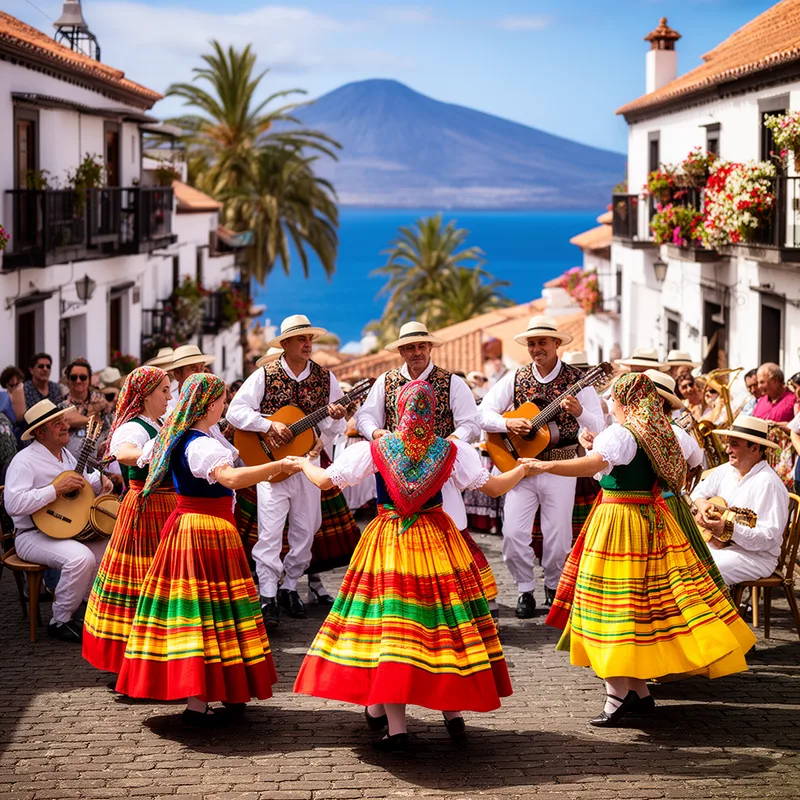
The Canarian culture is rich in traditional music and dance.
-
I tried a delicious Canarian dish made with fresh fish and local spices.
Surface Forms
Morphology
Canarian = Canary (transparent) = Canary + ian
Formed by the productive demonym suffix '-ian' added to the place name 'Canary'; the meaning 'relating to the Canary Islands' is directly predictable despite a minor spelling change (y → i).
Etymology
Canarian comes from the name Canary Islands, and that name comes from the Latin canis meaning 'dog' because the islands were once called 'islands of dogs'. So Canarian means 'from or about the Canary Islands'.