
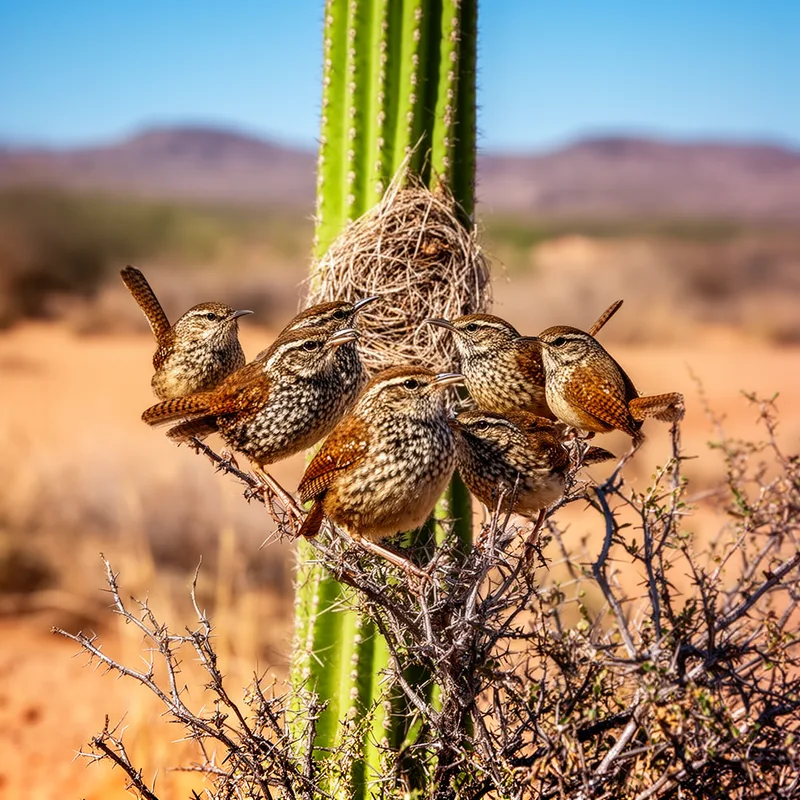
Campylorhynchus
- noun
- /ˌkæmpɪloʊˈrɪŋkəs/
- Specialized
- Cactus wrens, classified under Campylorhynchus, are well adapted to arid environments.
Examples
-
Ornithologists have studied Campylorhynchus species for their complex social structures.
-
The genus Campylorhynchus includes some of the largest wrens.
-
The Campylorhynchus is often seen in desert habitats.
-
Many species of Campylorhynchus thrive in arid regions.
-
Cactus wrens, classified under Campylorhynchus, are well adapted to arid environments.
-
Ornithologists have studied Campylorhynchus species for their complex social structures.
-
The genus Campylorhynchus includes some of the largest wrens.
Surface Forms
Etymology
Campylorhynchus comes from Greek parts campylo- meaning 'bent' and -rhynchus meaning 'beak' or 'snout'. So it literally says 'bent beak', a useful image because the cactus wrens in this group have long, slightly curved bills that help them feed in dry places.

