
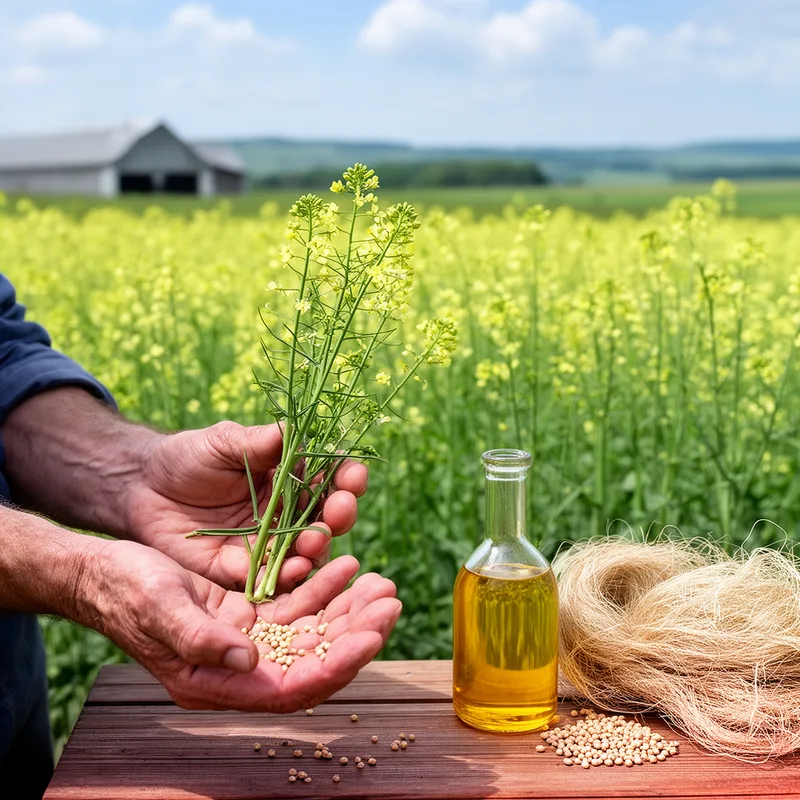
Camelina sativa
- proper noun
- Specialized
- The oil extracted from Camelina sativa is used in cooking.
Examples
-
Farmers in some regions have started growing Camelina sativa due to its hardy nature and economic potential.
-
Researchers are exploring the benefits of Camelina sativa for biofuel production.
-
Camelina sativa is gaining attention as a sustainable source of plant-based oil.
-
Farmers in Canada grow Camelina sativa for its high oil content.
-
Camelina sativa is increasingly recognized for its potential in sustainable agriculture and oil production.
-
Many farmers in North America are turning to Camelina sativa as a profitable crop due to its resilience and oil yield.
-
The seeds of Camelina sativa are valued for their high oil content and are used in various health products.
Synonyms

An annual plant with small yellow flowers grown for oil-rich seeds and fiber

A plant grown for seeds that give oil for food and cosmetics
Surface Forms
Morphology
The binomial 'Camelina sativa' is directly compositional: 'Camelina' names the genus (a mustard-family herb) and 'sativa' is a Latin epithet meaning 'cultivated' or 'used in cultivation', so a learner who knows both constituents can infer it denotes the cultivated Camelina species (an herb grown for its oil). Botanical Latin naming is a predictable, cross-linguistic convention, making the meaning derivable from the parts.
Etymology
Camelina sativa combines an old plant name Camelina and the Latin word sativa, which means 'sown' or 'grown'. So the name shows it is a plant people grew for its seeds and oil.

