
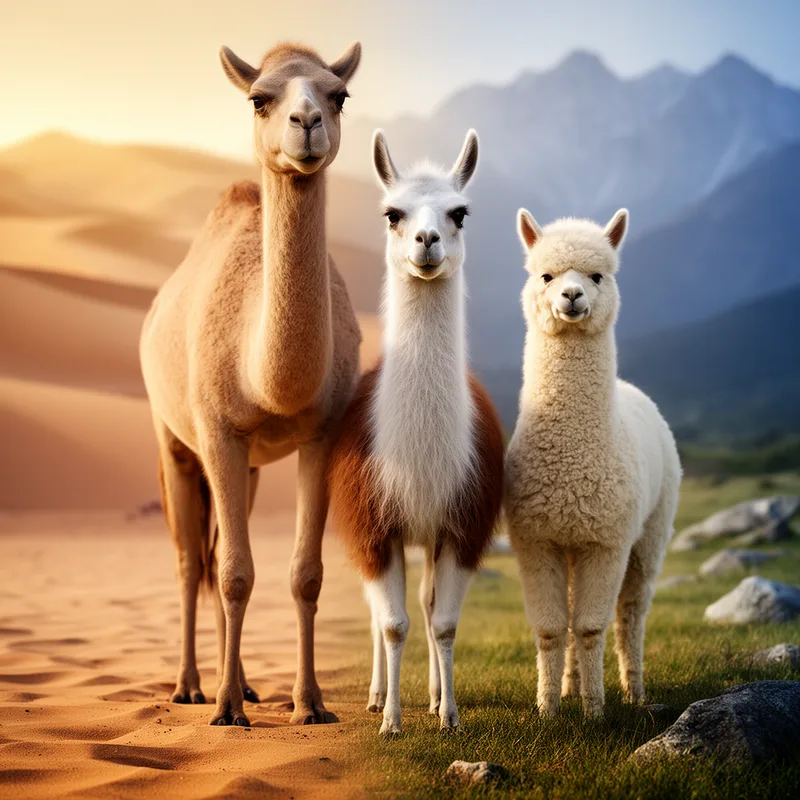
Camelidae


 1
9.5
- noun
- /ˈkæməˌleɪdə/
- Specialized
- Llamas and alpacas, both members of the Camelidae family, are important to Andean cultures.
Examples
-
The Camelidae family includes both camels and llamas.
-
Scientists study the evolution of Camelidae to better understand their unique physiological traits.
-
The Camelidae are well adapted to arid regions across South America and Asia.
-
Did you know that Camelidae are native to South America?
-
The family Camelidae includes familiar animals like the llama and alpaca.
-
Scientists study the Camelidae family to understand the evolution of camels and their relatives.
-
In the Camelidae family, the guanaco is a wild relative of the domesticated llama.
Surface Forms
Morphology
Etymology
The word Camelidae comes from the familiar word camel, from Latin camelus meaning 'camel', and the ending -idae is used to name an animal family. So, Camelidae means the family that includes camels, llamas, alpacas and their close relatives.