
Cambrian period
- noun
- /ˈkæmbriən ˈpɪərəd/
- Specialized
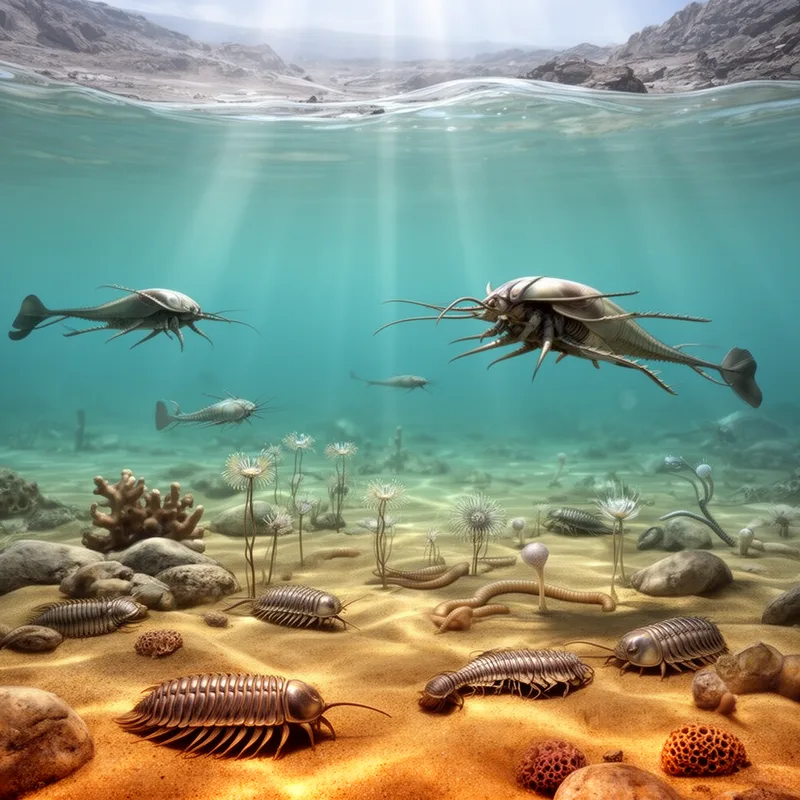
- Beginning at the base of the Cambrian period and extending for about 10 million years, all the major groups of skeletonized invertebrates made their first appearance in a most spectacular rise in diversity ever recorded.
Examples
-
Toward the end of the Cambrian period, many life forms went extinct.
Academic text (1992) -
These animals are living fossils, since they haven't changed much in millions of years, and look almost identical to their ancestors, which littered the ocean floor during the Cambrian period.
Blog text (4) -
The first fishes appeared more than five hundred million years ago, during the Cambrian period.
-
Toward the end of the Cambrian period, many life forms went extinct.
Synonyms

A very early time in Earth's history when many sea animals first appeared
Surface Forms
Morphology
The phrase is a straightforward composition: 'Cambrian' names a specific geological epoch and 'period' means a measured interval, so a learner who knows both constituents can infer it refers to the geological period called the Cambrian. This is a transparent, referential naming pattern (with cross-linguistic cognates), not an idiomatic or metaphorical use.
Etymology
Cambrian period gets its name from Cambria, the old Latin name for Wales, because scientists first studied rocks there that held many early fossils. Those Welsh rocks showed a quick rise of different sea animals, so the Cambrian period now means the early time when most major groups of marine animals appeared.

