

Calystegia sepium
- noun
- Specialized
- The rampant growth of Calystegia sepium can quickly cover garden fences and hedges.
Examples
-
In late spring, the pink and white flowers of Calystegia sepium bloom along country roadsides.
-
Gardeners often struggle to remove Calystegia sepium due to its extensive root system.
-
Calystegia sepium blooms beautifully.
-
Look at the lovely Calystegia sepium!
-
In late spring, the pink and white flowers of Calystegia sepium bloom along country roadsides.
-
Gardeners often struggle to remove Calystegia sepium due to its extensive root system.
-
The rampant growth of Calystegia sepium can quickly cover garden fences and hedges.
Synonyms
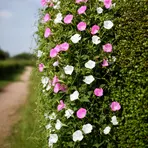
A climbing plant with pink or white flowers shaped like a trumpet that grows along hedges

A climbing wildflower with twining stems and pink or white trumpet-shaped flowers
Surface Forms
Morphology
Calystegia + sepium
The first constituent 'Calystegia' identifies a plant genus (climbing bindweeds), so a learner who knows that would grasp this is the name of a plant species. However 'sepium' is a Latin species epithet (not a common English word and not defined here), so the specific sense ('hedge' bindweed) is not transparently available to a typical B1 learner; overall the compositional clue yields partial but not full predictability.
Etymology
Calystegia sepium comes from old Greek words: Calystegia means 'covered cup' because the flower has leaf-like parts that hide its base, and sepium means 'of hedges' since the plant often climbs and grows in hedges. So the name helps you picture its trumpet-shaped flower and its habit of covering fences and hedges.

