
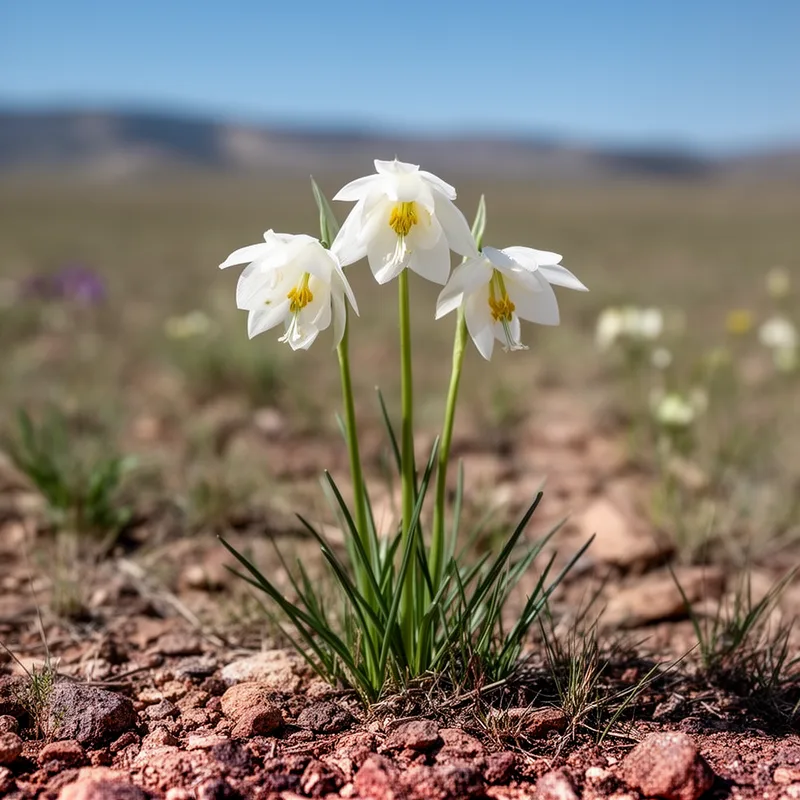
Calochortus nuttallii
- noun
- Specialized
- The Calochortus nuttallii blooms in spring, transforming the meadows with its striking white flowers.
Examples
-
Early settlers relied on the bulbs of Calochortus nuttallii for food during times of famine.
-
The Calochortus nuttallii can be found in the rocky soils of Utah and neighboring states.
-
Look at the stunning Calochortus nuttallii flowers!
-
The beautiful Calochortus nuttallii blooms in spring.
-
Early settlers relied on the bulbs of Calochortus nuttallii for food during times of famine.
-
The Calochortus nuttallii blooms in spring, transforming the meadows with its striking white flowers.
-
The Calochortus nuttallii can be found in the rocky soils of Utah and neighboring states.
Synonyms

A plant that lives many years with white bell-shaped flowers and edible bulbs from western North America
Surface Forms
Morphology
Calochortus + nuttallii
This is a Latin binomial (genus + species epithet). A learner who knows 'Calochortus' (a genus of bulbous herbs) could infer that the phrase names a type of plant, but 'nuttallii' is an eponymic Latin epithet with no descriptive meaning in English. The specific descriptive content (white bell-shaped flowers, edible bulbs) cannot be derived from the constituents, so the name is only partially informative.
Etymology
Calochortus nuttallii is the scientific name for the 'sego lily' and mixes the part Calochortus, which means 'beautiful grass', with nuttallii, named for the botanist Nuttall. Its white, bell-shaped flowers sit above an edible bulb that early settlers ate in hard times, so the plant is remembered as both a pretty flower and a lifesaving food.

