
Calliphora
- noun
- /ˌkælɪˈfɔːrə/
- Specialized
- The forensic entomologist identified the maggots as being from the genus Calliphora.
Examples
-
Researchers studied the life cycle of Calliphora to estimate the time of death.
-
Members of Calliphora are often the first insects to arrive at decomposing remains.
-
The Calliphora is often found near decomposing matter.
-
Researchers study Calliphorae to understand their role in decomposition.
-
Members of Calliphora are often the first insects to arrive at decomposing remains.
-
Researchers studied the life cycle of Calliphora to estimate the time of death.
-
The forensic entomologist identified the maggots as being from the genus Calliphora.
Compounds

- Specialized
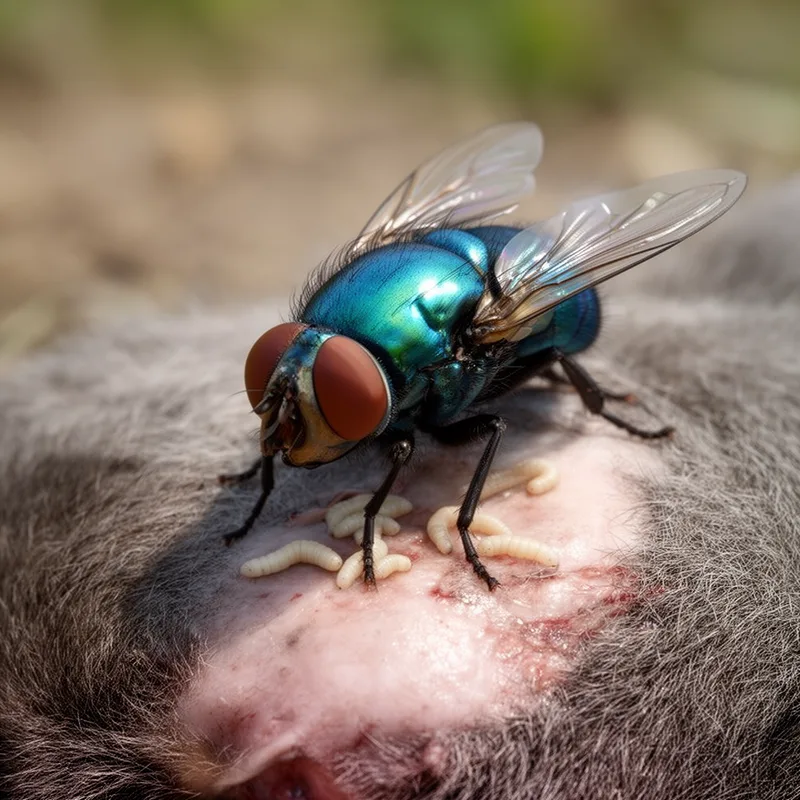
A common blue blowfly that makes a loud buzzing sound and lives near dead animals or trash
Surface Forms
Etymology
Calliphora comes from Greek parts kalli- meaning 'beautiful' (seen in calligraphy, 'beautiful writing') and -phora meaning 'bearer' or 'carrier'. So Calliphora means 'beautiful bearer', a fitting name for the shiny blue or green blowflies that often appear on dead bodies and are used in forensic work.

