

Calamintha sylvatica
- noun
- Specialized
- The leaves of Calamintha sylvatica give off a pleasant minty aroma when crushed.
Examples
-
Gardeners sometimes cultivate Calamintha sylvatica for its attractive flowers and scent.
-
I found Calamintha sylvatica growing in my garden.
-
Calamintha sylvatica thrives in the woodlands and meadows of southern Europe.
-
Have you ever used Calamintha sylvatica in your cooking?
-
Calamintha sylvatica thrives in the woodlands and meadows of southern Europe.
-
Gardeners sometimes cultivate Calamintha sylvatica for its attractive flowers and scent.
-
The leaves of Calamintha sylvatica give off a pleasant minty aroma when crushed.
Synonyms

A small plant that smells like mint and is used in gardens and herbal medicine
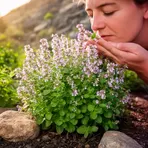
A plant with small flowers that smells like mint and lives for many years
Surface Forms
Morphology
Calamintha + sylvatica
The first element, Calamintha, explicitly marks a genus of aromatic/mint plants so it signals the item is a plant; the second element, sylvatica, is a Latin epithet (literally ‘of the woods’) rather than a common English word, so the full scientific name is partly interpretable but depends on knowledge of Latin/botanical naming. Because the term is a taxonomic binomial (a proper name) and the specific epithet is not a familiar English word, a B1 learner would get only a partial clue (that it’s a plant) rather than the full, precise meaning without prior exposure.
Etymology
Calamintha sylvatica may come from an old Greek word for a small mint-like plant and the Latin word sylvatica, which means 'of the woods'. So the name gives a clear picture: a little mint that grows in the woods, matching its minty smell and wild habitat.

