

Calamintha nepeta
- noun
- Specialized
- The gardener planted Calamintha nepeta along the walkway for its pleasant fragrance and attractive foliage.
Examples
-
Herbalists often use Calamintha nepeta in teas due to its aromatic leaves.
-
In some gardens, Calamintha nepeta helps attract pollinators like bees and butterflies.
-
I planted Calamintha nepeta in my garden last spring.
-
Have you ever tried using Calamintha nepeta in cooking?
-
Herbalists often use Calamintha nepeta in teas due to its aromatic leaves.
-
In some gardens, Calamintha nepeta helps attract pollinators like bees and butterflies.
-
The gardener planted Calamintha nepeta along the walkway for its pleasant fragrance and attractive foliage.
Synonyms
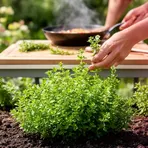
A low herb with a strong scent often used in cooking and gardens

A low, strong-smelling plant that grows back each year and is used in gardens and teas
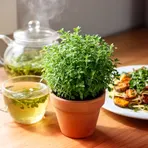
A small herb with a strong smell used to add flavor to food and make herbal tea
Surface Forms
Morphology
This is a Latin binomial (a proper scientific name). A learner who knows 'Calamintha' (a genus of aromatic plants) and 'nepeta' (mint-family plants) can infer it denotes a plant species in the mint family and likely aromatic, but they cannot derive the detailed horticultural sense (low-growing, perennial, native range) from the parts alone. Because the label functions as a specific name and requires botanical knowledge for full interpretation, the transparency is partial.
Etymology
Calamintha nepeta gets its name from old words for mint; the first part, Calamintha, may come from a Greek word for a 'mint' plant, and the second part, nepeta, links it to the 'catmint' group or a place name. So the name is a handy memory: it points to a small, strongly scented mint herb often used in teas and gardens.

