

Caesalpinioideae
- noun
- /ˌsiːzəlˈpɪniˌoʊdiː/
- Specialized
- The Caesalpinioideae subfamily includes many tropical species.
Examples
-
Many species belonging to the Caesalpinioideae thrive in tropical regions and contribute significantly to the local ecosystems.
-
Are Caesalpinioideae plants popular in landscaping?
-
Bauhinia is a well-known genus within the Caesalpinioideae.
-
Many tropical forests are dominated by legumes, particularly those of the Caesalpinioideae.
-
The Caesalpinioideae subfamily includes many ornamental and economically important trees.
-
The Caesalpinioideae subfamily includes various plants such as trees and shrubs that typically have pinnate leaves.
-
In botanical classifications, Caesalpinioideae is sometimes placed in its own family, highlighting its distinct characteristics.
Synonyms
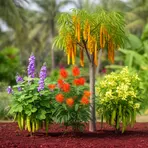
A group of flowering plants in the bean family

A group of trees and shrubs once treated as a separate plant family now part of the pea family

A group of flowering plants often seen as spiny trees and shrubs like carob and Bauhinia
Compounds
Surface Forms
Etymology
Caesalpinioideae comes from the plant name Caesalpinia, which was named for the Italian plant scientist Cesalpino, and the ending -oideae meaning 'like' or 'a group'. So Caesalpinioideae is the subfamily of plants 'like' Caesalpinia, a group of trees and shrubs in the pea and bean family.

