
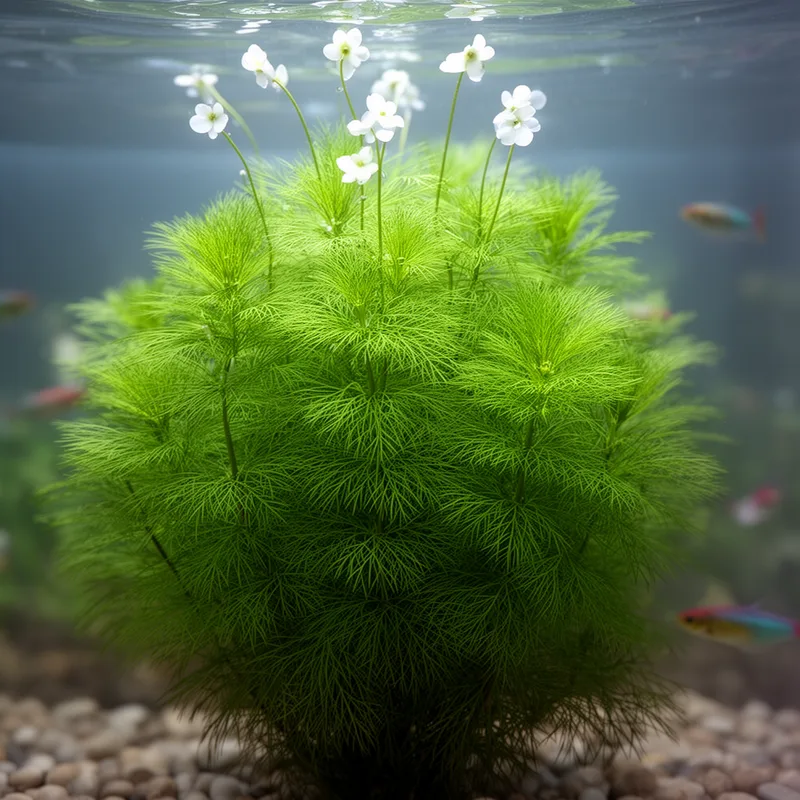
Cabomba caroliniana
- noun
- /kəˈbɑːmbə ˌkɛrəˈlɪniənə/
- Specialized
- The aquarium was filled with healthy Cabomba caroliniana that provided hiding places for the fish.
Examples
-
After learning that Cabomba caroliniana is an invasive species in some regions, she removed it from her pond.
-
Botanists studied how Cabomba caroliniana adapts to varying water conditions in its natural habitat.
-
The Cabomba caroliniana thrives in freshwater lakes.
-
Have you seen the Cabomba caroliniana in the aquarium?
-
The aquarium was filled with healthy Cabomba caroliniana, which provided excellent hiding places for the fish.
-
Botanists studied how Cabomba caroliniana adapts to varying water conditions in its natural habitat.
-
After learning that Cabomba caroliniana is an invasive species in some regions, she removed it from her pond.
Synonyms


 1
9.9
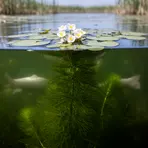
A water plant with floating and underwater leaves and white flowers with yellow spots
Surface Forms
Morphology
Cabomba + caroliniana
This is a scientific binomial: 'Cabomba' names the genus (an aquatic plant) while 'caroliniana' is a Latinized species epithet. A learner who knows 'Cabomba' could reasonably infer it refers to a type of Cabomba plant, but the precise taxonomic/ geographic sense of 'caroliniana' (and the convention of Latin species names) is not predictable for a B1 learner. Because part of the meaning (a specific species) is derivable but the species epithet is not transparently interpretable, the expression is semi-transparent.
Etymology
Cabomba caroliniana may come from an old local name for the plant, with Cabomba as the first part and caroliniana meaning 'from Carolina'. Its fan-like leaves that float or lie under the water and its small white flowers give a clear picture: a 'water plant' from that region, so the name helps you remember it.