

CD8
 2
8.1
2
8.1

- noun
- /siː diː eɪt/
- Specialized
- CTLA4 blockade predominantly restrains T regulatory cells (Tregs) to increase the proportion of CD8+ T cells.
- CD8 T cells
- CD8 T cell counts
Examples
-
Of interest, median CMV-specific interferon-gamma CD8+ T-cell counts were comparable in D-/R and D+/R+ pairs (P = 0.470).
Academic text (2018) -
Enlargement of the salivary glands due to infiltration by CD8 lymphocytes is seen in both adult and pediatric HIV infection (figure 3).
Academic text (2000) -
The diagnosis of juvenile patch MF with CD8+ cells was made.
Academic text (2007) -
However, direct survival effects of IFN-I have also been reported on intratumoral CD8 T cells.
Academic text (2017) -
Lymphoproliferation mainly involved T cells negative for the CD4 and CD8 receptors.
Academic text (2000) -
However, it is suggested that CD8+ Tregs suppress target cells by both contact-dependent and contact-independent mechanisms.
Blog text (11) -
The patient also had a low CD4 (52 UL) and CD8 (92 UL) count.
Academic text (2007) -
Recent studies have reported the preferential activation of drug-specific CD8+ T cells in the pathophysiology of some bullous drug eruptions.
Academic text (2007) -
Although the diagnosis is often made clinically, histology shows infiltrates of perifollicular and intrafollicular CD4+ and/or CD8+ T-cells.
Academic text (2007) -
The activity of CD8 cells is crucial for recognizing and destroying infected or cancerous cells.
Synonyms
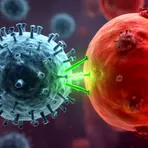
A protein on the surface of killer T cells that helps them find infected cells
Compounds

- Specialized
A type of white blood cell that finds and kills virus-infected or abnormal cells

Surface Forms
Etymology
The word CD8 is the name scientists gave to a protein on the surface of some immune cells, where the CD part stands for the label 'cluster of differentiation' and the 8 is the group number. So, CD8 is used as a marker to identify the cytotoxic, or 'killer', T cells that help the body fight infections.