

Buxus sempervirens
- noun
- Specialized
- The formal garden was edged with Buxus sempervirens trimmed into neat shapes.
Examples
-
The slow-growing nature of Buxus sempervirens makes it ideal for long-lasting landscape designs.
-
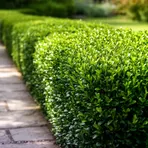
The garden is lined with Buxus sempervirens hedges.
-
Gardeners often choose Buxus sempervirens for creating dense hedges and artistic topiary.
-
Many landscapers prefer Buxus sempervirens for its durability.
-
Gardeners often choose Buxus sempervirens for creating dense hedges and artistic topiary.
-
The formal garden was edged with Buxus sempervirens trimmed into neat shapes.
-
The slow-growing nature of Buxus sempervirens makes it ideal for long-lasting landscape designs.
Synonyms
 33
7.3
33
7.3

A small evergreen shrub with thick leaves often used for hedges
 3
6.2
3
6.2
An evergreen shrub or small tree with small glossy leaves often grown as a hedge

A small evergreen bush with dense leaves often used for hedges and garden shapes

A slow-growing evergreen bush or small tree used for hedges and neat shapes
Surface Forms
Morphology
The binomial is compositional: Buxus (the boxwood genus) + sempervirens (literally 'always green' / evergreen) yields 'evergreen boxwood' — a species of boxwood that remains green year‑round. The epithet directly describes a salient attribute, so a learner who knows both constituent meanings can infer the MWE's referent without prior exposure.
Etymology
Buxus sempervirens gets its name from old words: Buxus was the name for the 'box' tree used to make small wooden boxes, and sempervirens is Latin for 'always green'. So the name shows it is a boxwood that stays green all year, which is why gardeners use it for hedges and topiary.